Proudly serving Tucson, Oro Valley, Marana, Sahuarita, Green Valley, Vail & surrounding areasCall or Text 24/7: +1 (520) 567-5263

Roadside Assistance in Tucson, AZ for Jump Starts, Lockouts & Flat Tire Service

Tucson Towing Co. provides 24/7 roadside assistance and emergency towing across Tucson, Arizona. Drivers can call for jump starts, vehicle lockout help, flatbed towing, motorcycle towing, and light- or medium-duty service. Heavy-duty towing, accident recovery, and long-distance transport are also available for larger or more complex calls. Local dispatchers answer directly and match each situation with the appropriate truck and equipment.

Tucson pavement temperatures regularly climb past 150 degrees Fahrenheit, which can accelerate battery, tire, and cooling-system trouble. Monsoon flooding can also leave vehicles stranded in washes, sand, or gravel shoulders. GPS dispatch routes the closest available unit while tracking traffic, distance, and changing truck availability. Before a truck arrives, dispatch explains what happens next and helps you choose a safe place to wait.

Operators are trained for front-wheel-drive, all-wheel-drive, and electric vehicles, and jobs are handled under commercial insurance and applicable Arizona Department of Transportation weight and equipment rules. The fleet includes hydraulic flatbeds, wheel-lift units, heavy-duty wreckers, winch recovery gear, jump boxes, air compressors, and lockout kits.

Tucson Towing Co. provides roadside assistance throughout Tucson, Oro Valley, Marana, Sahuarita, and the greater Pima County metro area.

★ ★ ★ ★ ★4.9/5 Average Rating · 20+ Years of Experience · Thousands of Customers Helped · Licensed & Insured · Residential & Commercial

Tucson Roadside Assistance Options

What Does Roadside Assistance Include?

Roadside assistance covers problems that may be resolved where the vehicle stops, including battery jump starts and non-destructive lockout entry. Service trucks also carry air compressors, tire repair kits, extra coolant, and traction boards for common desert-road conditions.

If a vehicle cannot be made safe to drive, dispatch can send the right towing equipment rather than leave the driver to arrange a second call. Flatbeds, wheel-lift units, and wreckers cover passenger cars, motorcycles, commercial vehicles, RVs, trailers, and oversized loads.

The dispatcher asks for your location, vehicle type, and situation, then routes the closest available truck through GPS dispatch software. Calls stay with Tucson Towing Co. employees instead of being handed to an outsourced call center or third party.

Benefits of Local Roadside Assistance

One local dispatch line connects drivers with both roadside help and towing options, allowing the response to fit the vehicle, road position, and type of breakdown.

  • 24/7 dispatch every day of the year
  • GPS routing to the closest available truck
  • On-scene battery testing and jump starts
  • Non-destructive vehicle lockout techniques
  • Flatbed transport for sensitive or damaged vehicles
  • Dedicated chocks and soft ties for motorcycles
  • Heavy-duty capacity for commercial vehicles, RVs, and trailers
  • Accident recovery and long-distance towing support
Towing and Recovery

Roadside Assistance and Towing Services

Tucson Towing Co. matches emergency, specialty, commercial, collision, and long-distance calls with equipment suited to the vehicle and recovery conditions.

24/7 Emergency Towing

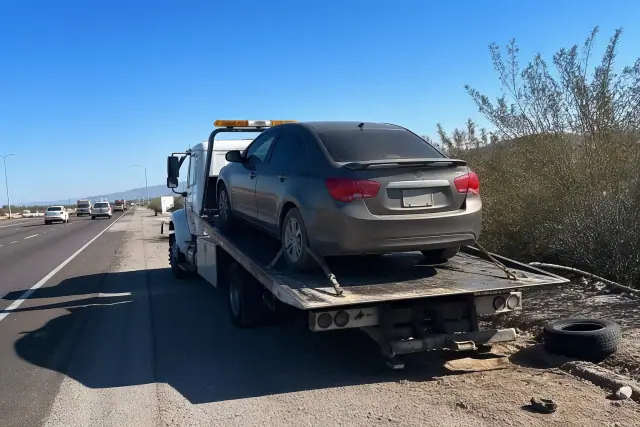
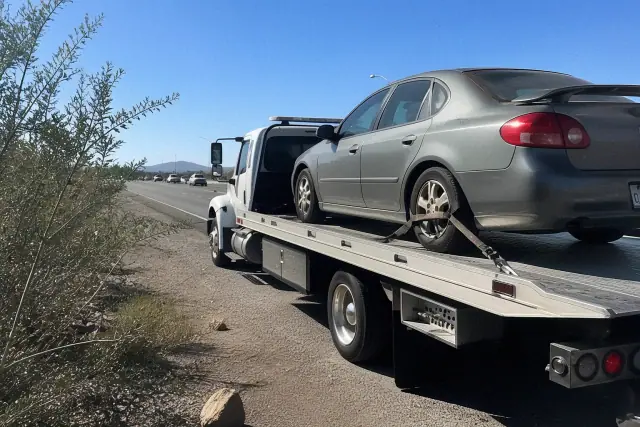
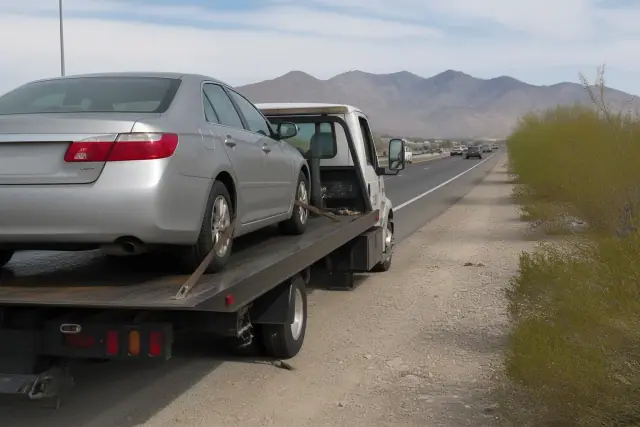
A flatbed tow truck with a disabled sedan on a highway shoulder in Tucson, AZ, surrounded by desert scrub.

A dead alternator on Ajo Way at 2 a.m. or a breakdown during rush hour can be dispatched around the clock. The local dispatcher considers traffic, distance, time of day, vehicle class, and the nearest available unit before routing a truck.

Request Estimate

Flatbed Towing

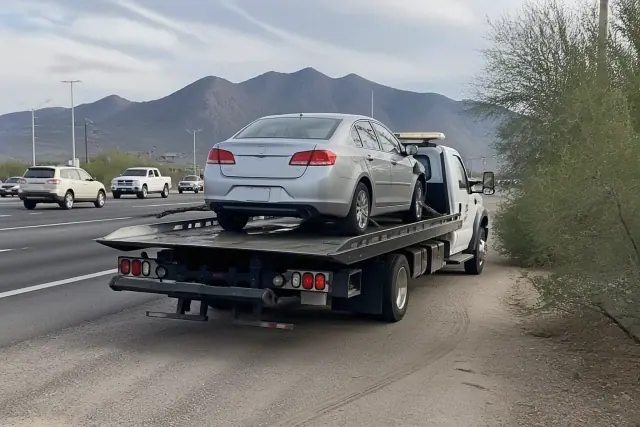
A flatbed tow truck hauling a disabled sedan on a busy road in Tucson, AZ, with desert mountains in the background.

Flatbed transport keeps all four wheels off the pavement, which helps protect all-wheel-drive, lowered, classic, modified, and collision-damaged vehicles. Hydraulic tilt decks, low-angle ramps, and winches rated for several tons support controlled loading, while a minimum of four-point tie-downs secures the vehicle for highway travel.

Request Estimate

Motorcycle Towing

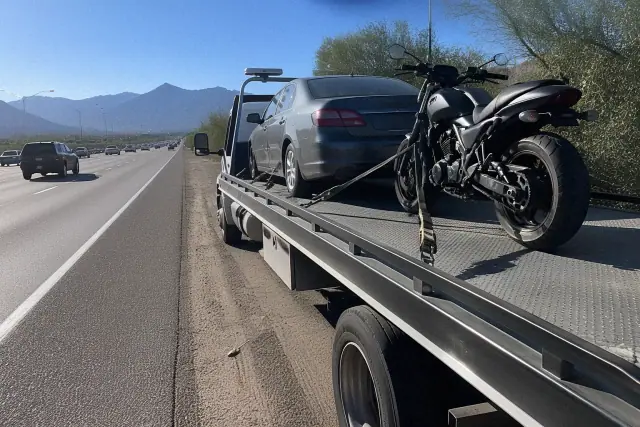
A motorcycle secured with straps on a flatbed tow truck parked by a desert road in Tucson, AZ.

Motorcycles and scooters are loaded with dedicated chocks, low-deck flatbeds, and soft-tie straps that avoid painted surfaces, chrome, and plastic fairings. The front tire is chocked and the bike is secured at multiple points so it remains upright through Tucson-area curves.

Request Estimate

Heavy-Duty Towing

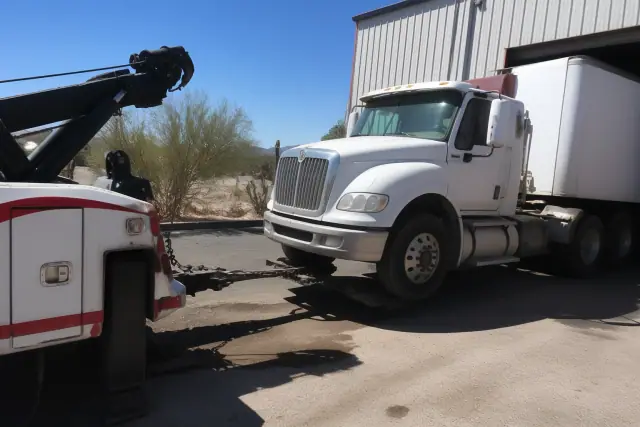
Heavy-duty wrecker truck lifting a commercial semi-truck at an industrial loading bay in Tucson, AZ.

Heavy-duty wreckers, underlift capacity, and air-brake knowledge support semi-trucks, RVs, trailers, overturned vehicles, and multi-axle loads. Rotator and wrecker units handle specialized rigging, with Arizona Department of Transportation escort and permitting requirements followed when an oversized load requires them.

Request Estimate

Accident Recovery

A flatbed tow truck securing a disabled sedan on the side of a sunny road in Tucson, AZ.

Accident recovery combines careful scene clearance with flatbed transport to reduce further frame or drivetrain harm. Operators photograph vehicle condition before loading and coordinate documentation with Tucson Police Department, Pima County Sheriff's Department, and insurance adjusters when the call requires it.

Request Estimate

Long-Distance Towing

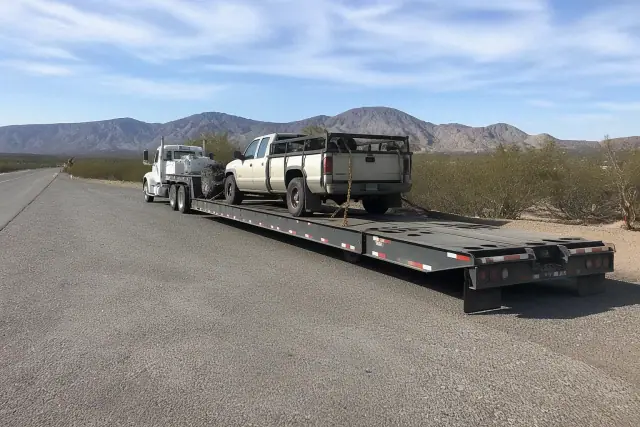
Heavy-duty tow truck with a transport trailer secured by chains parked on a roadside in Tucson, AZ.

Extended routes are planned around construction, weigh stations, weather, fuel stops, and driver rotation on trips exceeding a few hours. A tow toward Phoenix, 108 miles northwest, or south toward the border is quoted by mileage and vehicle class, and flatbed tie-down tension is checked at fuel stops whether the trip lasts thirty minutes or three hours.

Request Estimate
Service Options

Types of Roadside Assistance Options

The right roadside response depends on whether the problem can be handled where the vehicle stopped or requires towing and recovery equipment. These options cover common passenger, commercial, and difficult-terrain calls described by Tucson drivers.

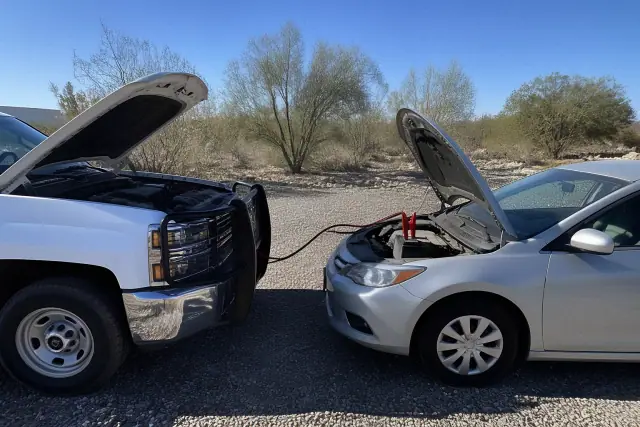
Service vehicle jump-starting a sedan with jumper cables on a gravel lot in Tucson, AZ.

Battery Jump Starts

Operators test voltage and load capacity before deciding whether a jump is likely to get the vehicle running or whether the battery needs replacement. Once the truck is on scene, a battery jump start typically takes under fifteen minutes.

  • On-scene voltage testing
  • Battery load-capacity assessment
  • Proper cable sequencing
  • Voltage matching for sensitive electronics
  • Commercial jump boxes carried on service units
Request Estimate
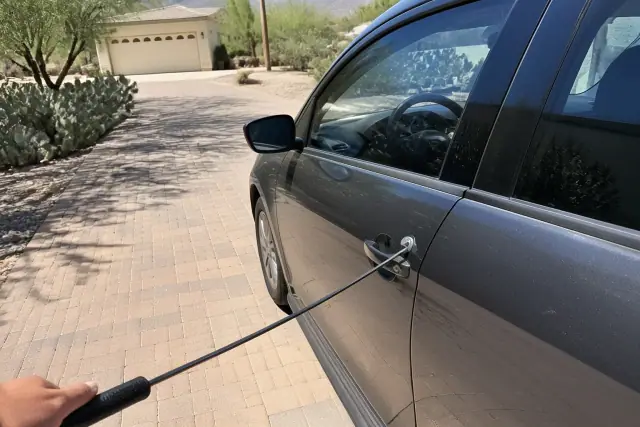
Technician using a lockout tool to open a compact car door in a residential driveway in Tucson, AZ.

Vehicle Lockout Assistance

Most lockouts resolve in minutes once the truck arrives. The entry method is selected for the make, model, door structure, and side-curtain airbag location to avoid scratched paint or bent frames.

  • Air-wedge entry options
  • Long-reach tools
  • Slim-jim techniques when appropriate
  • Methods selected around side-curtain airbags
  • Support for sedans, SUVs, trucks, and vans
Request Estimate
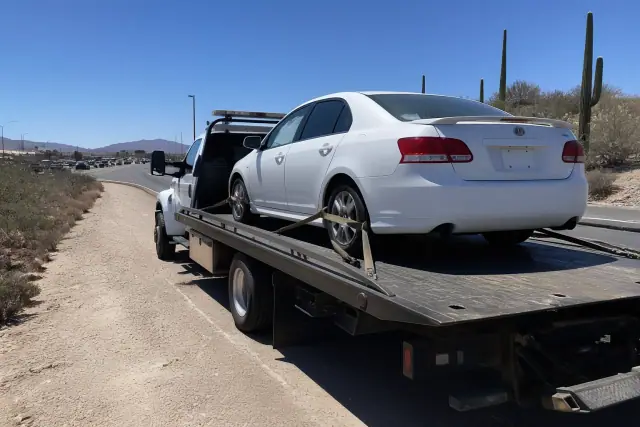
Flatbed tow truck loading a disabled sedan on a highway shoulder with desert mountains in the background in Tucson, AZ.

Light-Duty Towing

Light-duty towing serves passenger vehicles such as sedans and smaller SUVs. The operator considers drivetrain layout, ground clearance, damage, and destination before choosing a wheel-lift or flatbed approach.

  • Passenger sedans and smaller SUVs
  • Front-wheel-drive hookup procedures
  • All-wheel-drive transport considerations
  • Wheel-lift equipment when suitable
  • Flatbed loading for low-clearance vehicles
Request Estimate
A flatbed tow truck with a disabled sedan secured on a highway shoulder in Tucson, AZ, surrounded by desert landscape.

Medium-Duty Towing

Medium-duty service is matched to delivery vans, box trucks, and other commercial vehicles that exceed ordinary passenger-tow needs. Dispatch confirms vehicle class and breakdown details so the responding unit has suitable capacity and rigging.

  • Delivery vans
  • Box trucks
  • Mid-size commercial fleets
  • Capacity matched to vehicle class
  • Rigging selected for the breakdown
Request Estimate
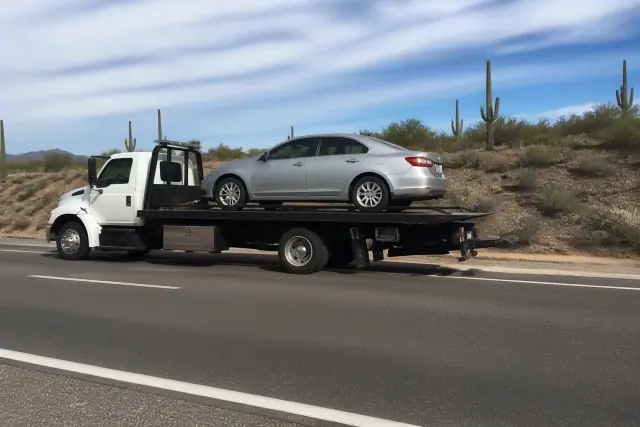
A flatbed truck carrying a disabled sedan on a roadside in Tucson, AZ, surrounded by desert scrub and saguaro cacti.

Winch and Difficult-Terrain Recovery

Winch recovery gear and traction boards help operators recover vehicles stuck in washes or on the sand and gravel shoulders common along Tucson's outer roads. The truck and rigging are selected for the vehicle size, position, and surrounding terrain.

  • Winch recovery gear
  • Traction boards
  • Wash recovery after monsoon flooding
  • Sand and gravel shoulder recovery
  • Equipment matched to vehicle position
Request Estimate
Choosing the Right Response

Matching the Vehicle to the Right Response

A safe response starts with the vehicle type, drivetrain, condition, road position, and destination. Tucson Towing Co. uses those details to decide whether roadside equipment, a wheel lift, a hydraulic flatbed, or a heavier wrecker is appropriate.

GPS Dispatch and Local Road Knowledge

Real-time truck tracking lets dispatch route the closest unit and redirect when a nearer truck becomes available mid-call. Operators know Tucson trouble spots from the I-10 and I-19 corridors to Gates Pass, the University of Arizona area, and the Catalina Highway curves.

Trained, Licensed, and Insured Operators

Operators complete manufacturer-specific and towing-industry training for proper hookup of front-wheel-drive, all-wheel-drive, and electric vehicles. Jobs are performed by licensed operators under commercial insurance and applicable Arizona Department of Transportation weight and equipment regulations.

Equipment for Multiple Vehicle Classes

Hydraulic flatbeds, wheel lifts, heavy-duty wreckers, rotators, motorcycle chocks, winches, and roadside tools allow one fleet to serve everything from scooters and sedans to commercial rigs and multi-axle trailers. Each unit is stocked for desert conditions with extra coolant, tire repair kits, and traction boards.

Local Roadside Support

Why Choose Tucson Towing Co. for Roadside Assistance?

Calls are answered by local employees who explain the next step, match the equipment to the vehicle, and provide upfront quotes for long-distance work. For collision calls, the team can coordinate scene timing and documentation with law enforcement and insurance adjusters.

Request Roadside Help

Dead Battery in Desert Heat

Desert heat shortens battery life significantly: a battery rated for five years in a milder climate often fails closer to three years in Tucson. On-scene voltage and load testing helps determine whether a jump start is appropriate or replacement is the more likely next step.

Keys Locked Inside a Vehicle

A lockout can require different entry points on modern vehicles with side-curtain airbags than on older models. Operators select from air wedges, long-reach tools, and slim jims to restore access without scratching paint or bending the door frame.

Tire and Cooling-System Trouble

Extreme pavement heat can punish tires and cooling systems as well as batteries. Tucson service units carry air compressors, tire repair kits, and extra coolant so dispatch can send roadside equipment suited to the problem you describe.

Collision-Damaged Vehicles

A collision can leave a vehicle unsafe to roll or steer and can make ordinary towing cause additional frame or drivetrain damage. Flatbed loading, pre-transport photographs, and coordination with first responders help move the vehicle while preserving useful claims documentation.

Vehicles Stuck in Washes, Sand, or Gravel

Monsoon flooding can strand vehicles in low-water crossings, while outer roads add sand and gravel shoulder hazards. Recovery may call for traction boards, winch gear, and a truck selected for the vehicle's size and position rather than a standard roadside unit.

Commercial Truck and Trailer Breakdowns

Box trucks, delivery vans, semi-trucks, RVs, and trailers need towing capacity and hookup knowledge beyond an ordinary passenger tow. Confirming the vehicle class, load, trailer position, and air-brake needs helps dispatch choose suitable underlift, wrecker, or rotator equipment.

How It Works

Our Roadside Assistance Process

Dispatch collects the details needed to send an appropriate truck, keeps you informed, and guides the call from roadside assessment through service, recovery, or transport.

01.

Call Local Dispatch

Share your exact location, vehicle type, and what happened. A Tucson Towing Co. employee answers the call directly and explains what information is needed next.

02.

Route the Closest Available Unit

GPS dispatch compares truck locations, traffic, distance, and time of day. If a closer unit becomes available mid-call, dispatch can redirect the response.

03.

Match the Equipment to the Vehicle

Dispatch uses the vehicle class, drivetrain, damage, and road position to select roadside tools, a wheel lift, a flatbed, or heavy recovery equipment. That avoids sending a passenger-tow unit to a motorcycle, commercial rig, or oversized load.

04.

Wait Safely for the Operator

Dispatch explains what happens next and asks whether the vehicle is on a freeway shoulder, blind curve, flooded crossing, or another hazardous position. Follow the safety guidance for your location and keep your phone reachable for updates.

05.

Assess and Stabilize the Vehicle

On arrival, the operator checks the immediate problem and vehicle condition before using a jump box, lockout tool, winch, wheel lift, or flatbed. Damaged or downed vehicles are stabilized before loading to reduce further harm.

06.

Complete Service or Transport

The operator completes the roadside service or secures the vehicle for transport to the agreed destination. Collision condition photographs, tie-down checks, insurance documentation, or long-route planning are handled when the call requires them.

Get Moving Again

Call for Tucson Roadside
Assistance
Now

Tell dispatch where you are, what you drive, and what went wrong. Tucson Towing Co. will explain the response, match the appropriate equipment, and quote long-distance work before dispatch when applicable.

Roadside Help

Roadside Assistance FAQs

Find practical answers about Tucson roadside safety, towing distance, lockouts, jump starts, vehicle transport, and dispatch.

Call Roadside Dispatch

Arizona does not offer a free general roadside assistance program for all stranded drivers. Arizona Department of Public Safety Roadside Motorist Assistance patrols certain freeway corridors and may provide limited help such as fuel delivery or a push to safety, but it is not a substitute for full towing or roadside coverage. Call 911 if you are stopped on a freeway shoulder so public safety knows your location while you wait.

Yes, roadside assistance companies can dispatch service to non-members, but a non-member generally pays the full service-call cost without a membership discount. Tucson Towing Co. does not require a membership and quotes the rate directly before the truck arrives.

The lower-cost choice depends on how often you need help and what the plan covers. Standalone annual plans typically run between $36 and $150 a year, while paying per call may cost less overall for drivers who rarely need service. Compare covered towing distance, jump starts, tire changes, and lockouts with the upfront price of a local dispatch.

311 is the City of Tucson's non-emergency information and service line for matters such as potholes, abandoned vehicles, and general city services. It is not a roadside assistance or towing dispatch number. Call a towing provider for a breakdown, or 911 when you are in immediate roadway danger.

Stay with the vehicle when it is safe because that helps the operator locate you and confirm your situation. If the car is on a freeway shoulder, blind curve, or another hazardous spot, move a safe distance from traffic and remain visible. Tell dispatch exactly where you are waiting.

Turn on your hazard lights and set out reflective triangles or flares if you have them. On a road shoulder, remain inside with your seatbelt fastened when that is the safer option; move away from traffic when the vehicle's position is hazardous. In Tucson heat, use available shade, stay hydrated, and keep your phone reachable for dispatch updates.

Towing distance depends on the service or coverage plan, and standard tows may include a set mileage radius before added per-mile charges. Long-distance trips are quoted separately using total mileage and vehicle class. Tucson Towing Co. provides a cost breakdown before dispatching long-haul work.

Flatbed transport is suited to all-wheel-drive, lowered, classic, modified, and collision-damaged vehicles because all four wheels remain off the pavement. Hydraulic tilt decks and low-angle ramps reduce ground-clearance stress, while wheel straps and axle straps help avoid rim and bumper damage.

The front tire is held in a dedicated motorcycle chock, and soft ties replace metal hooks near paint, chrome, and plastic fairings. The bike is secured upright at multiple points on a low-deck flatbed so it cannot shift during transport.

Yes, the fleet includes heavy-duty units for RVs, semi-trucks, trailers, multi-axle loads, and overturned vehicles. Dispatch needs the vehicle class, load, position, and air-brake details so it can select suitable underlift, wrecker, rotator, and rigging capacity.

The operator assesses and stabilizes the damaged vehicle, photographs its condition before loading, and usually uses flatbed transport to avoid further frame or drivetrain harm. When needed, Tucson Towing Co. coordinates scene timing and documentation with law enforcement and insurance adjusters.

A battery jump start typically takes under fifteen minutes once the truck is on scene. The operator first tests voltage and load capacity, then uses proper cable sequencing and voltage matching to protect sensitive vehicle electronics.

Provide your exact location, vehicle type, drivetrain if known, the problem or visible damage, and whether the vehicle is in a hazardous position. For larger vehicles, also describe the load, trailer, air-brake system, and road or terrain conditions so dispatch can match the correct equipment.