Proudly serving Tucson, Oro Valley, Marana, Sahuarita, Green Valley, Vail & surrounding areasCall or Text 24/7: +1 (520) 567-5263

Heavy Duty Towing in Tucson, AZ for Semi-Trucks, RVs & Construction Equipment

Tucson Towing Co. provides heavy duty towing in Tucson for semi-trucks, loaded box trucks, buses, RVs, trailers, and construction equipment. Our team handles commercial breakdowns, semi-truck recovery, accident recovery, equipment relocation, and long-distance towing. Heavy wreckers, rotator-equipped units, and oversized-load flatbeds let us match the truck and rigging to the vehicle. The same dispatch operation also coordinates emergency towing and roadside recovery when a commercial vehicle cannot continue safely.

Tucson's I-10 and I-19 freight corridors carry rigs over 26,000 pounds through summer pavement temperatures above 140 degrees. Tire, brake, and drivetrain failures can leave a loaded vehicle in a dangerous position where standard tow equipment lacks the boom capacity, axle rating, or winch pull required. Our operators train on heavy recovery, roadway safety, and load securement under Federal Motor Carrier Safety Administration guidelines. We assess the vehicle and scene before dispatch so the correct unit arrives for the weight, damage, and recovery angle.

We carry the commercial insurance coverage Arizona requires for heavy wrecker operations and provide documentation when an insurance towing claim requires it. Whenever possible, dispatch explains the hookup, mileage, winching, and specialized labor included in the quote before a truck leaves the yard.

Tucson Towing Co. provides heavy duty towing throughout Tucson, South Tucson, Marana, Oro Valley, Sahuarita, and the greater Pima County metro area.

★ ★ ★ ★ ★4.9/5 Average Rating · 20+ Years of Experience · Thousands of Customers Helped · Licensed & Insured · Residential & Commercial

Heavy Duty Towing Options & Benefits

What Is Heavy Duty Towing?

A tow is generally classified as heavy duty when the vehicle exceeds 17,000 pounds. That category includes semi-trucks, loaded box trucks, RVs, buses, and heavy construction machinery.

Trying to move a 40,000-pound tractor-trailer with undersized equipment can snap chains, damage the frame, and make an active-roadway recovery more dangerous. Heavy wreckers supply the boom capacity, axle rating, winch line pull, air-brake connections, and underlift strength needed for this weight class.

In Tucson, this equipment is especially important along I-10, I-19, Houghton Road, and commercial routes near the Port of Tucson rail terminal. The recovery plan changes with the load, vehicle condition, shoulder surface, traffic, and angle of the disabled rig.

Benefits of Professional Heavy Duty Towing

Purpose-built equipment and a deliberate recovery plan help move large vehicles without adding avoidable damage or roadway risk.

  • Equipment matched to vehicles above 17,000 pounds
  • High-capacity heavy wreckers for oversized commercial loads
  • Rotator-equipped units for overturned and off-angle recoveries
  • Underlift attachments and air-brake systems for large vehicles
  • Winches and rigging selected for vehicle weight and scene conditions
  • Load securement checks based on FMCSA guidelines
  • Recovery methods designed to prevent additional vehicle damage
  • Upfront explanations of hookup, mileage, winching, and labor
Tucson Commercial Recovery

Heavy Duty Towing Services

Our heavy duty operation covers commercial breakdowns, complex accident scenes, specialized vehicle transport, and extended-distance moves. Dispatch uses the vehicle class, load, damage, and destination to select the recovery method.

Semi-Truck & Commercial Vehicle Recovery

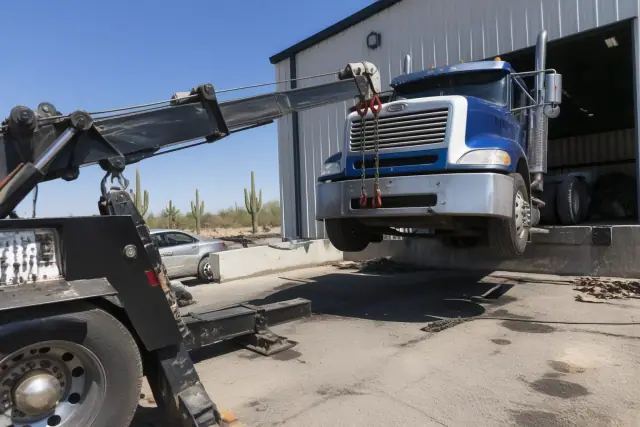
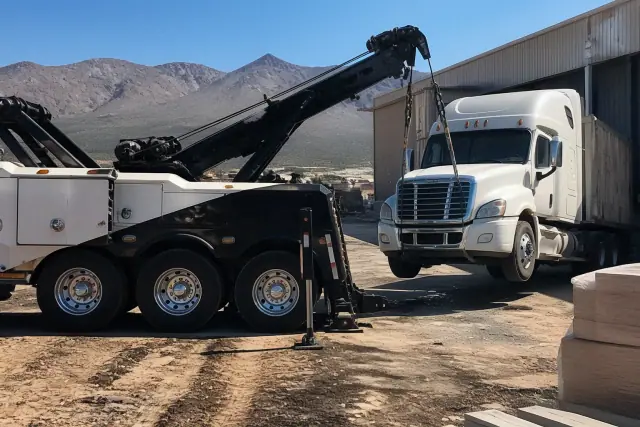
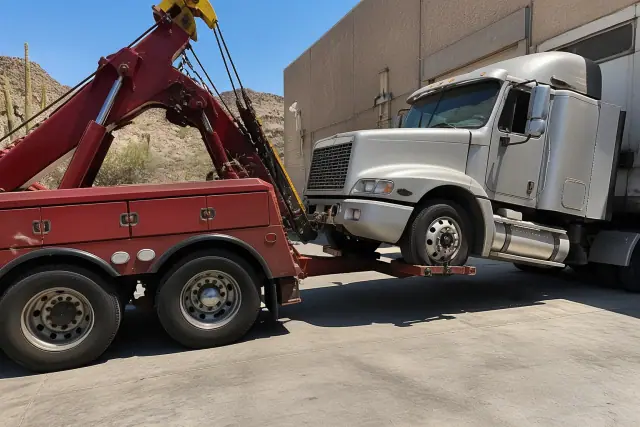
Heavy-duty wrecker truck lifting a commercial semi-truck at an industrial loading bay in Tucson, AZ.

We recover tractor-trailers, loaded box trucks, delivery vehicles, and other commercial rigs on Tucson freight lanes and local distribution routes. Depending on the scene, a tractor may be moved alone or while still coupled to its trailer.

Request Estimate

Trailer and Specialty Equipment Towing

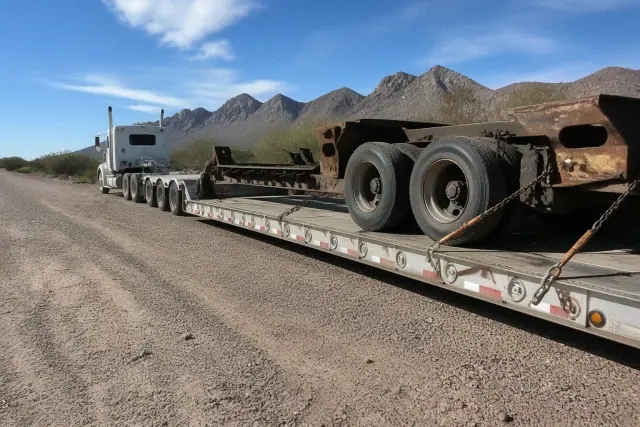
Heavy-duty truck towing a large transport trailer on a highway pull-off in Tucson, AZ, with desert mountains in the back.

Flatbed, refrigerated, livestock, construction, detached, and jackknifed trailers each require different securement points and weight distribution. We inspect the coupling and trailer condition before choosing a direct tow, dollies, or flatbed transport.

Request Estimate

Bus and Transit Vehicle Recovery

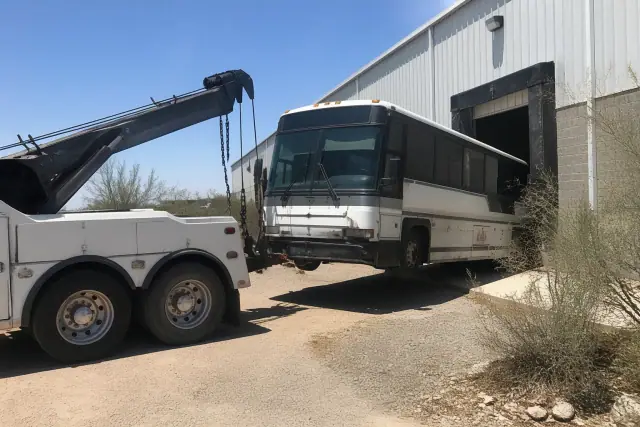
Heavy-duty wrecker truck recovering a bus at an industrial loading bay in Tucson, AZ.

School buses, tour coaches, and transit vehicles require planning around vehicle length and passenger evacuation. When passengers remain aboard, our crew coordinates with first responders so unloading happens before towing begins.

Request Estimate

Construction Equipment Relocation

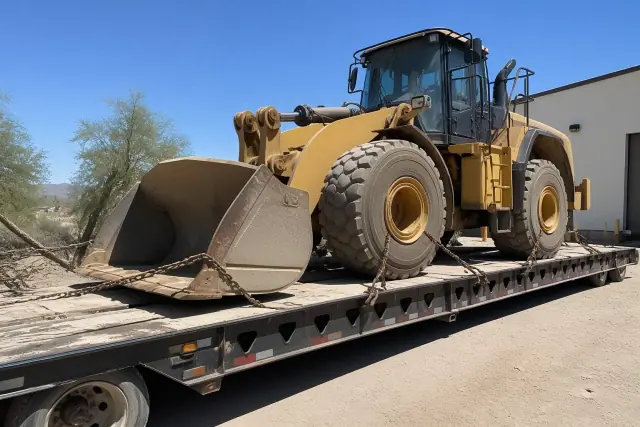
Yellow construction equipment secured with chains on a flatbed trailer at a desert jobsite in Tucson, AZ.

Heavy construction machinery and equipment trailers need suitable loading angles, rated securement points, and balanced weight distribution. We choose between heavy wrecker and flatbed transport according to the machine, trailer, and destination.

Request Estimate

Heavy-Vehicle Accident Recovery

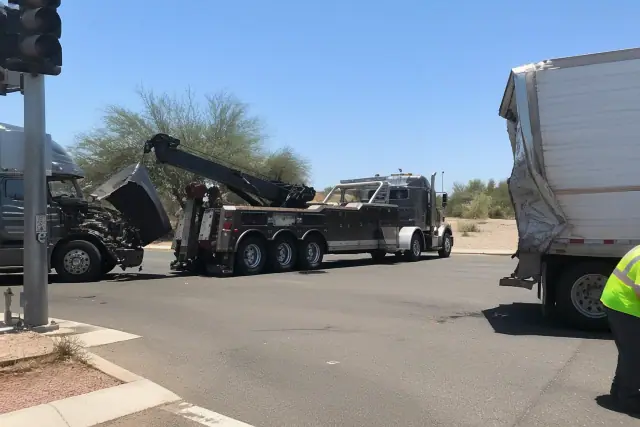
Heavy-duty recovery truck at an intersection during a vehicle accident cleanup in Tucson, AZ.

Accident-damaged heavy vehicles may have compromised frames, ruptured fuel lines, or shifted cargo. We document the condition, evaluate support points, and coordinate with law enforcement, insurance adjusters, or cleanup crews when the scene requires it.

Request Estimate

Long-Distance Heavy Duty Towing

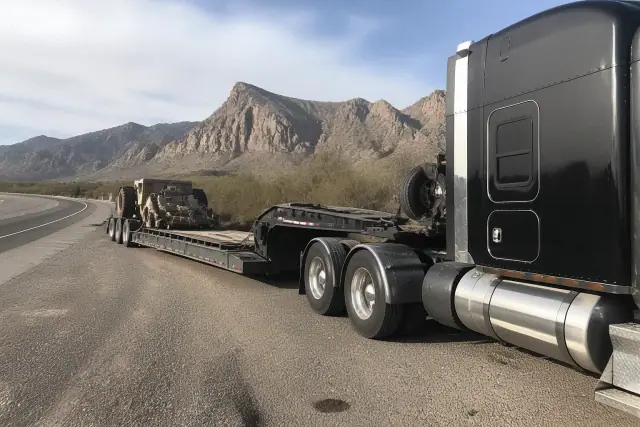
A heavy-duty tow truck pulling a transport trailer on a roadside near mountains in Tucson, AZ.

For regional or interstate transport, we plan around weight restrictions, bridge clearances, mountain grades, fuel stops, and rest points. Operators perform secondary securement checks and monitor the tow rig's tire pressure and brake temperature during scheduled stops.

Request Estimate
Equipment for Complex Recoveries

Heavy Duty Towing Equipment & Options

No single tow configuration fits every semi, bus, RV, trailer, or machine. We match the boom, bed, underlift, winch, air-brake setup, and securement method to the vehicle and scene.

Heavy-duty wrecker lifting the front axle of a semi-truck at an industrial site in Tucson, AZ.

Heavy Wreckers

Our heavy wreckers use hydraulic booms, strong winch lines, and underlift attachments for large commercial vehicles. The fleet is built to handle vehicles up to 60 tons when the selected configuration and recovery conditions allow.

  • Tractor units and coupled tractor-trailers
  • Loaded box trucks and commercial delivery vehicles
  • RVs, buses, and transit vehicles
  • Heavy construction machinery
  • High-capacity lifting, winching, and underlift support
Request Estimate
Heavy-duty wrecker truck lifting a semi-truck at an industrial loading dock in Tucson, AZ.

Rotator Tow Trucks

Rotator-equipped units are used when a heavy vehicle has rolled, jackknifed, or stopped at an angle that a standard wheel-lift truck cannot approach safely. Their rotating booms support controlled lifting and winching from the recovery angle the scene requires.

  • Overturned commercial vehicle recovery
  • Off-angle lifting and stabilization
  • Jackknifed tractor-trailer recovery
  • Flexible boom positioning around roadway obstacles
  • Controlled recovery on active highway scenes
Request Estimate
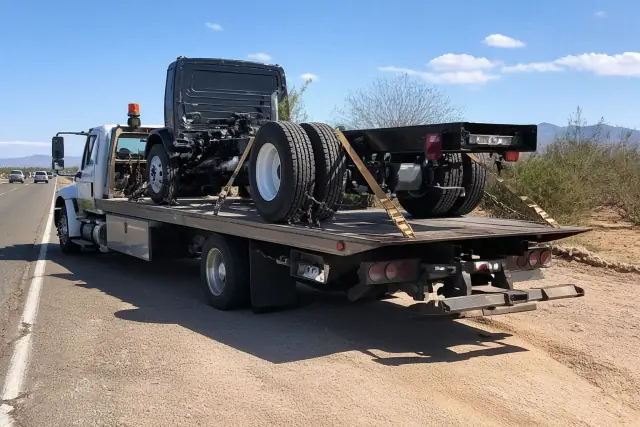
Heavy duty flatbed truck secured with chains and straps on a roadside in Tucson, AZ, surrounded by desert scrub.

Heavy Duty Flatbed Rigs

Flatbed rigs rated for oversized loads provide a transport option when a direct tow is not suitable. We evaluate the equipment dimensions, weight distribution, and securement points before loading.

  • Construction equipment and machinery
  • Flatbed and construction equipment trailers
  • Refrigerated and livestock trailers
  • Accident-damaged vehicles requiring full support
  • Regional and extended highway transport
Request Estimate
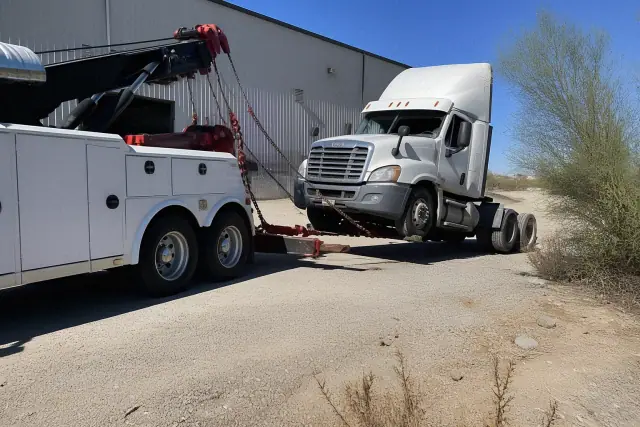
Heavy-duty wrecker towing a semi-truck with chains and hydraulic booms at an industrial site in Tucson, AZ.

Underlift and Air-Brake Towing

Underlift attachments support a heavy vehicle at rated axle or frame points, while compatible air-brake equipment helps prepare large commercial vehicles for transport. The exact setup depends on the tractor, trailer, and damage present.

  • Rated support for heavy axles and frames
  • Air-brake connections for commercial vehicles
  • Tractor recovery with or without a coupled trailer
  • Secure positioning before the vehicle moves
  • Secondary securement checks for longer trips
Request Estimate
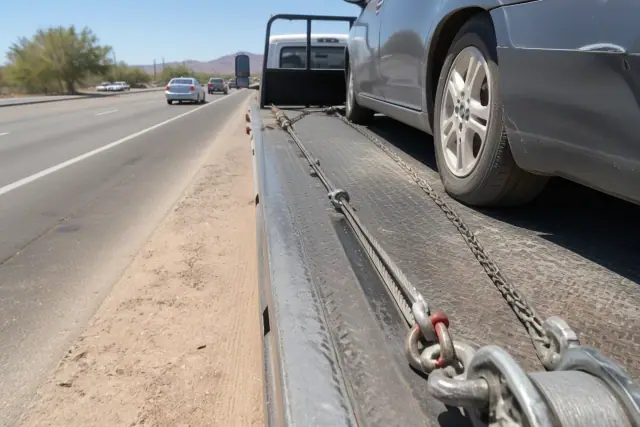
Heavy-duty tow truck using winching cables and rigging to secure a disabled sedan on a road in Tucson, AZ.

Winching and Specialized Rigging

Winching and rigging are essential when a rig is stuck on a soft shoulder, overturned, or damaged in a way that prevents a normal hookup. Operators choose line angles, chains, axle straps, and support points after inspecting the vehicle and load.

  • Soft-shoulder and stuck-vehicle extraction
  • Winch angles planned around vehicle damage
  • Axle straps and chain securement rated for the load
  • Support points selected to protect the frame
  • Rigging adjusted for shifted cargo or fluid leaks
Request Estimate
Matching Equipment to the Scene

Choosing the Right Heavy Towing Approach

The safest approach starts with accurate information about the vehicle type, weight, load, location, damage, and destination. Those details determine whether the job needs a heavy wrecker, rotator, flatbed, underlift, winching, or a combination of methods.

Weight-Rated Recovery Fleet

Our fleet includes heavy wreckers, rotator-equipped units, and flatbeds rated for oversized loads. Matching the equipment to the actual weight class avoids relying on the boom, axle, or winch capacity of a standard tow truck.

Trained Operators and Securement

Operators train specifically on heavy recovery, roadway safety, and load securement. Before transport, every tie-down point is checked against the vehicle's condition and weight class using FMCSA securement guidelines.

Tucson Route and Scene Planning

Our team plans around Tucson's freight corridors, interchanges, winding grades near Gates Pass, and commercial traffic near the rail yards. Recovery angles, traffic control, weight restrictions, and bridge clearances are considered before the vehicle moves.

What Sets Us Apart

Why Choose Tucson Towing Co. for Heavy Duty Recovery?

Tucson Towing Co. operates as a licensed towing company, carries the commercial insurance required for heavy wrecker work, and maintains its rotator and wrecker fleet on a regular service schedule. Dispatch explains which truck is coming, gives a timing estimate based on current road conditions, and quotes the job before work starts whenever possible. Itemized invoices show hookup, mileage, winching, and specialized labor instead of hiding those charges.

Request a Heavy Towing Quote

Commercial Vehicle Breakdowns

Heat, heavy loads, and long highway miles can strain tires, brakes, and drivetrains until a rig cannot continue. A disabled semi on an active shoulder needs equipment sized for the vehicle and a recovery plan that protects passing motorists.

Jackknifed or Overturned Rigs

A jackknifed or rolled tractor-trailer may sit at an angle a wheel-lift truck cannot handle safely. Rotator-equipped recovery lets the crew stabilize, lift, and winch the vehicle from a more suitable position.

Soft-Shoulder and Off-Road Recovery

A loaded vehicle stuck on a soft shoulder needs more rigging and recovery time than one parked on pavement. We evaluate the ground, load, pulling angle, and available support before applying winch force.

Shifted Cargo and Structural Damage

A collision can shift cargo or compromise a frame, changing both the balance and safe lifting points. The operator inspects structural integrity and cargo position before choosing support points and winch angles.

Fluid Leaks After a Collision

Ruptured fuel lines and other leaks affect how crews approach an accident-damaged heavy vehicle. We check for fluid loss on arrival and coordinate with first responders or environmental cleanup crews when the scene requires it.

Fleet Downtime on Long Routes

A commercial breakdown interrupts deliveries, construction schedules, and driver routes. Dispatch tracks fleet emergency calls separately and sends the appropriate heavy unit so an undersized truck does not add another delay.

How Recovery Works

Our Heavy Duty Towing Process

Heavy recovery starts with a detailed dispatch assessment and continues through vehicle inspection, rigging, securement, transport, and load monitoring. Each step is adjusted for the vehicle's weight, damage, cargo, location, and destination.

01.

Call and Vehicle Assessment

Dispatch gathers the vehicle type, weight, location, destination, and nature of the breakdown or accident. Details about cargo, trailers, leaks, and roadway position help define the job before equipment is assigned.

02.

Equipment Selection and Dispatch

The information from the call determines whether the response needs a heavy wrecker, rotator, flatbed, underlift, or specialized rigging. Sending the correct unit first avoids arriving with a truck that is undersized for the load.

03.

On-Scene Safety Evaluation

On arrival, the operator checks vehicle condition, traffic exposure, fluid leaks, shifted cargo, coupling damage, and structural integrity. Those findings may change the recovery method or require coordination with first responders.

04.

Stabilization and Rigging

The crew stabilizes the vehicle and selects winch angles, support points, underlift attachments, or flatbed loading based on the scene. Accident-damaged and off-angle vehicles are positioned carefully to avoid adding frame, transmission, or air-line damage.

05.

Securement and Final Checks

Axle straps, chains, tie-down points, and underlift connections are selected for the vehicle's weight class. Every securement point is checked before the tow rig moves.

06.

Transport and Load Monitoring

The vehicle is transported to the repair shop, impound lot, or other specified destination while the operator monitors the load. Long-distance jobs include planned stops for securement checks and tow-rig tire and brake monitoring.

Heavy Towing Help

Call for Tucson
Heavy Duty
Recovery

Tell dispatch what vehicle is involved, its approximate weight, where it is located, and whether the scene includes a trailer, shifted cargo, leaks, or collision damage. We will explain the likely recovery setup and quote structure before dispatch whenever possible.

Heavy Towing Answers

Heavy Duty Towing FAQs

These answers cover heavy towing costs, vehicle classes, recovery equipment, Arizona rules, dispatch details, long-distance transport, and Tucson-area coverage.

Call Our Heavy Towing Team

A 200-mile heavy duty tow generally combines a base hookup fee with a per-mile charge of roughly $2.50 to $8 or more, depending on vehicle class and equipment. A haul of that length commonly falls between $600 and $1,800 or higher, with rig size, terrain, fuel, and any required escort vehicle affecting the total. Tucson Towing Co. calculates long-distance pricing before departure.

A standard local tow in Tucson typically runs $75 to $125 for the first 5 to 10 miles, plus about $2.50 to $5 for each additional mile. Heavy duty towing starts higher because it may require larger equipment, winching, and specialized rigging time. The exact quote depends on vehicle weight, recovery complexity, time of day, and destination.

Warning signs include cash-only demands, refusal to provide an itemized invoice, undisclosed storage or lot fees, inflated mileage, or a tow performed without proper authorization. Be cautious when an operator will not explain pricing before hookup. Tucson Towing Co. provides detailed invoices and quotes before dispatch whenever possible.

Arizona permits double towing only under specific size, weight, and vehicle-configuration conditions. Commercial combinations also need to meet applicable federal weight and length requirements. Whether a setup qualifies depends on the particular tow vehicle and trailers involved.

Arizona towing rules address operator licensing and insurance, non-consensual tow notices, private-property signage, storage charges, and vehicle-release procedures. Non-consensual removals require specific authorization and notification steps. Tucson Towing Co. operates as a licensed, insured towing company under the applicable state requirements.

The 80/20 rule is a general guideline that keeps a tow vehicle at about 80 percent or less of its rated towing capacity to preserve a margin for handling, braking, passengers, cargo, and fuel. Heavy commercial recovery uses similar safety margins for boom capacity and winch line pull. Operators still base the actual setup on rated equipment and the full vehicle and load details.

The answer depends on the truck class and equipment. Light duty units handle motorcycles and passenger vehicles, medium duty trucks handle larger pickups and box trucks, and heavy wreckers or rotators handle semi-trucks, buses, RVs, and heavy construction equipment. Matching the towing unit to the vehicle is essential for a controlled recovery.

A tow is generally considered heavy duty when the vehicle exceeds 17,000 pounds. This class commonly includes semi-trucks, loaded box trucks, buses, RVs, and heavy construction machinery. Dispatch should confirm the actual vehicle and load information before selecting a truck.

Be ready to share the vehicle type, approximate weight, exact location, destination, and the nature of the breakdown or accident. Also mention a coupled trailer, shifted cargo, fluid leaks, structural damage, or a soft shoulder. These details help dispatch send the correct equipment the first time.

Yes, the fleet includes rotator-equipped units and heavy wreckers for overturned, jackknifed, and off-angle recoveries. The operator first evaluates the frame, cargo, leaks, traffic exposure, and available rigging points. Stabilization and winch angles are then planned to avoid causing additional damage.

Operators use rated axle straps, chains, tie-down points, and underlift attachments appropriate to the vehicle's weight and condition. Securement follows Federal Motor Carrier Safety Administration guidelines, and every connection is checked before movement. Extended trips include additional checks at planned stops.

Yes, Tucson Towing Co. handles regional and interstate commercial transport. Tucson is 108 miles southeast of Phoenix and roughly 60 miles north of the U.S.-Mexico border, so route planning may include mountain grades, weight restrictions, bridge clearances, fuel stops, and rest points. Long-distance quotes are calculated before departure.

Tucson Towing Co. provides 24-hour heavy duty towing in Tucson, South Tucson, Marana, Oro Valley, Sahuarita, and the greater Pima County metro area. Dispatch answers around the clock for commercial breakdowns, emergency towing, and accident recovery. The available unit depends on the vehicle and scene details provided during the call.