Proudly serving Tucson, Oro Valley, Marana, Sahuarita, Green Valley, Vail & surrounding areasCall or Text 24/7: +1 (520) 567-5263

Accident Recovery in Tucson, AZ for Collision Cleanup & Damaged Vehicle Extraction

Tucson Towing Co. provides accident recovery throughout Tucson and the greater Pima County area. Our crews handle emergency towing, flatbed transport, motorcycle recovery, and light-, medium-, or heavy-duty collision towing. Wheel-lift and hydraulic flatbed rigs let us match the recovery method to the vehicle's condition. We serve drivers, insurance adjusters, and responding agencies when a damaged vehicle needs to leave the roadway safely.

Collisions along I-10, Speedway Boulevard, Kolb Road, and Wilmot Road can become more dangerous when monsoon rain reduces traction and visibility. Our operators train under WreckMaster-based recovery protocols and work under valid Arizona Department of Transportation motor carrier authority. The company is licensed and insured for collision recovery work. At the scene, we coordinate vehicle movement with Arizona Department of Public Safety troopers or Pima County Sheriff's Department deputies when they are responding.

Fast roadway clearance limits exposure to passing traffic and Tucson summer pavement, where surface temperatures regularly exceed 140 degrees in July and August. Tell dispatch your location, how many vehicles are involved, and whether the vehicle can roll so the appropriate rig can be routed.

Tucson Towing Co. provides accident recovery in Tucson and nearby Oro Valley, Marana, Sahuarita, Green Valley, and the greater Pima County metro area.

★ ★ ★ ★ ★4.9/5 Average Rating · 20+ Years of Experience · Thousands of Customers Helped · Licensed & Insured · Residential & Commercial

Accident Recovery Services & Benefits

What Is Accident Recovery?

Accident recovery goes beyond routine towing. It covers the extraction, stabilization, and transport of a collision-damaged vehicle that may have leaking fluids, deployed airbags, structural damage, or a compromised undercarriage.

The operator assesses whether the vehicle can be winched, moved by wheel lift, or loaded onto a flatbed with dollies. Selecting the method from the actual damage helps avoid additional stress on the drivetrain, suspension, steering, and wheels.

Before transport, our crew photographs vehicle condition. Mileage, condition, and arrival time are then logged so the driver, insurer, or designated repair facility has a documented chain of custody.

Benefits of Professional Accident Recovery

A planned recovery clears the hazard while protecting the damaged vehicle and preserving useful records. The crew can coordinate the move, choose vehicle-specific equipment, secure the load, and deliver it to the approved destination.

  • Removes disabled vehicles from active traffic lanes
  • Matches wheel-lift, flatbed, dolly, winch, or heavy-wrecker equipment to the damage
  • Limits secondary stress on axles, transmissions, steering, and suspension
  • Documents pre-transport vehicle condition with photos
  • Accounts for leaks, tire damage, frame concerns, and deployed airbags
  • Secures the vehicle with straps and axle-rated tie-downs
  • Delivers to our secure yard or your preferred body shop
  • Carries jump-start and lockout equipment so one dispatch can address related needs
Accident Recovery Services

Tucson Accident Recovery Services

Collision scenes call for different equipment and handling. Our accident recovery options cover passenger vehicles, motorcycles, commercial trucks, vehicles that leave the roadway, and damaged vehicles that need transport beyond Tucson.

Emergency Accident Towing

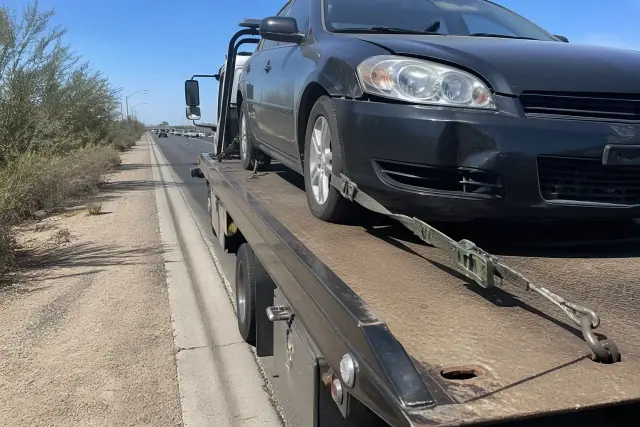
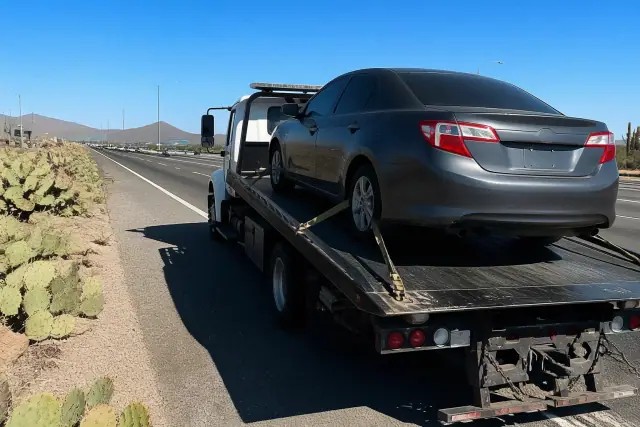
Flatbed tow truck recovering a disabled sedan on a roadside in Tucson, AZ, showing securement hardware and winch lines.

Around-the-clock dispatch routes the nearest suitable rig after collecting the location, vehicle count, and drivability details. This service helps clear crash hazards on corridors such as Grant Road, Broadway Boulevard, and I-10.

Request Estimate

Flatbed Accident Transport

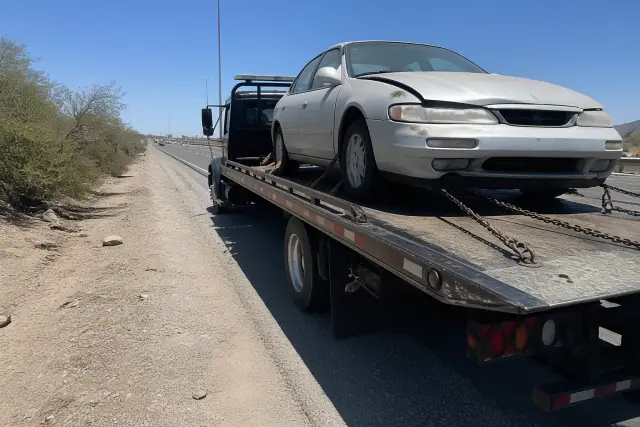
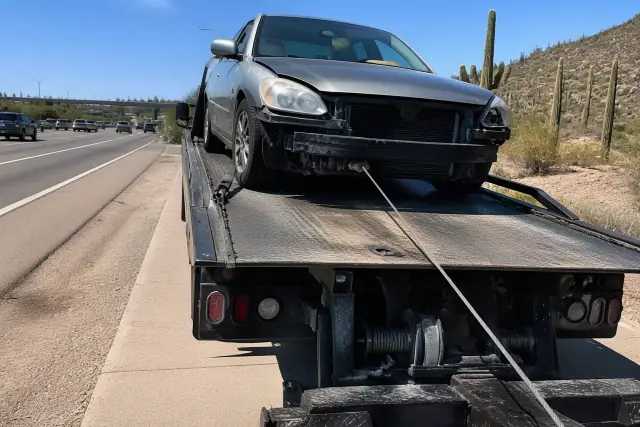
A flatbed truck with a disabled sedan secured by safety chains on a highway shoulder in Tucson, AZ.

A hydraulic flatbed carries the entire vehicle instead of dragging two wheels on the pavement. It is the preferred method for bent rims, blown tires, misaligned suspension, visible frame damage, or steering affected by airbag deployment.

Request Estimate

Heavy-Duty Collision Recovery

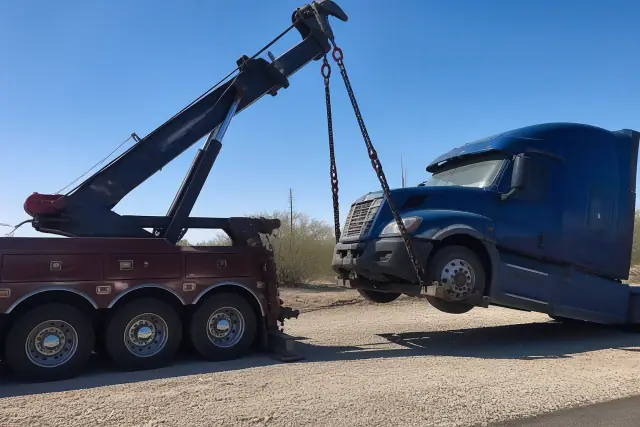
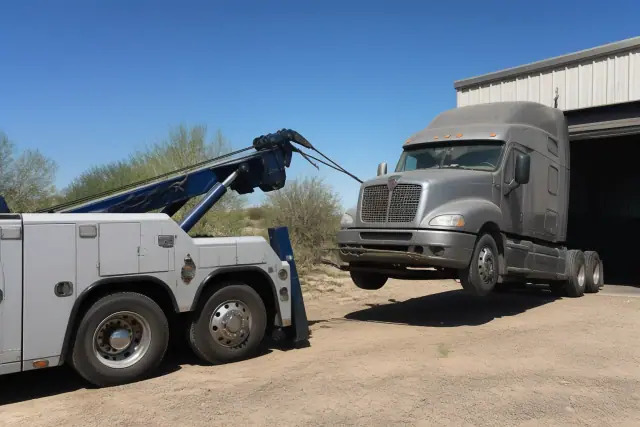
Heavy-duty wrecker truck lifting a commercial semi-truck axle on gravel near creosote bushes in Tucson, AZ.

Commercial trucks, RVs, and other heavy vehicles may require heavy wreckers or rotator capacity. During multi-vehicle crashes on I-10 or I-19, several recovery trucks can be staged under Arizona Department of Public Safety incident direction to clear lanes safely.

Request Estimate

Motorcycle Accident Recovery

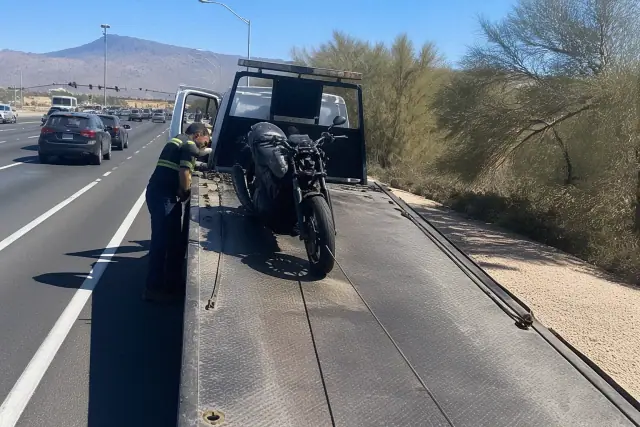
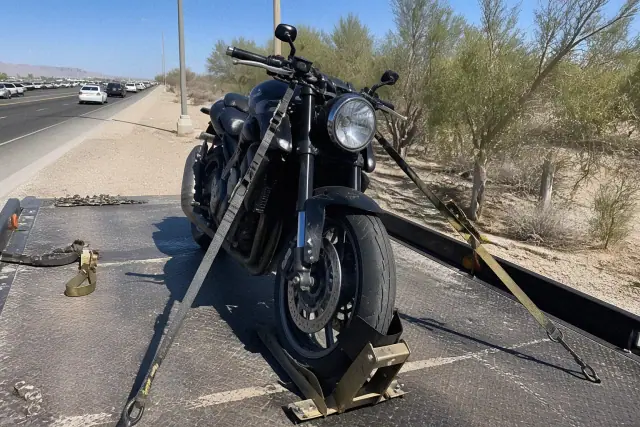
A damaged motorcycle being winched onto a flatbed truck on a roadside in Tucson, AZ, with desert mountains in the background.

Motorcycles with bent forks, damaged fairings, or compromised handlebars need equipment that avoids additional contact damage. Front-wheel chocks, soft ties, and multi-point securement hold the motorcycle upright without loading the frame or exhaust system.

Request Estimate

Off-Road Extraction and Winching

A sedan secured to a flatbed tow truck during an off-road recovery on a sunny road in Tucson, AZ.

A vehicle that leaves the roadway into a desert wash, median, or ditch must be stabilized before extraction. Heavy-duty rigs use synthetic winch line rated beyond standard vehicle weight for a controlled pull near areas such as the Santa Catalina foothills.

Request Estimate

Long-Distance Accident Towing

A flatbed tow truck carrying a disabled sedan on a busy road in Tucson, AZ, with desert hills in the background.

Drivers passing through Tucson can arrange transport to a home city or chosen repair shop. For example, Phoenix is 108 miles north and the border is 60 miles south, with mileage and timing confirmed before dispatch.

Request Estimate
Recovery Equipment Options

Vehicle-Specific Recovery Methods

The safest towing method depends on vehicle weight, wheel movement, drivetrain condition, suspension damage, and where the vehicle came to rest. Operators assess those conditions before choosing wheel-lift, flatbed, motorcycle, heavy-wrecker, dolly, or winch equipment.

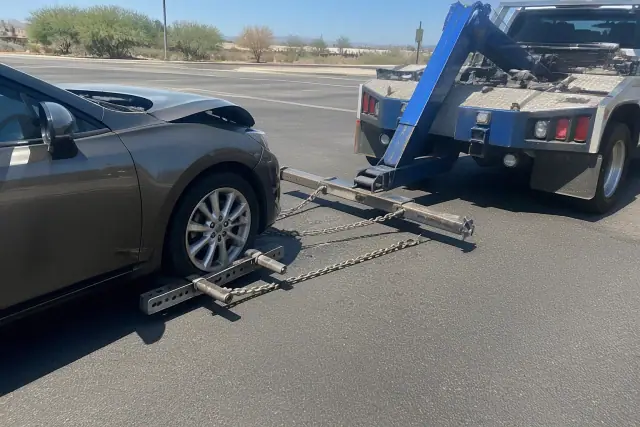
Wheel-lift recovery truck hooking up a vehicle at a sunlit asphalt intersection in Tucson, AZ.

Wheel-Lift Recovery

Wheel-lift extraction can suit a drivable-but-disabled passenger vehicle or light truck when the remaining wheels and drivetrain permit safe movement. The operator verifies the damage before lifting.

  • Suitable for selected light-duty vehicles
  • Used only when wheel and drivetrain condition allow
  • Can move a light truck with a damaged axle when properly configured
  • Requires a pre-rigging damage check
  • Avoided when suspension or wheel damage makes rolling unsafe
Request Estimate
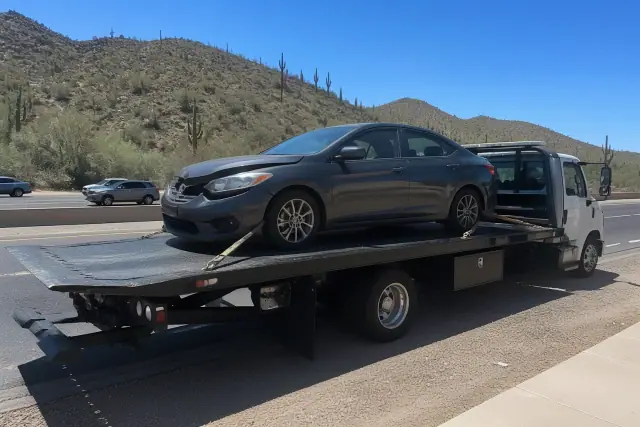
Hydraulic flatbed truck towing a disabled sedan on the shoulder of a highway in Tucson, AZ.

Hydraulic Flatbed Transport

A hydraulic tilt bed loads the complete vehicle onto the deck and keeps all four wheels off the roadway. This method is used when rolling the vehicle could compound collision damage.

  • Keeps the entire vehicle on a flat deck
  • Reduces stress on damaged axles and transmissions
  • Accommodates sedans, SUVs, and light trucks
  • Uses deck tie-down points for secure transport
  • Preferred when drivability is uncertain
Request Estimate
Motorcycle secured with chocks and soft ties on a flatbed truck in the desert near Tucson, AZ.

Motorcycle Chocks and Soft Ties

Motorcycle-specific recovery keeps the bike upright and avoids hard contact with fragile components. It is especially important after crashes on routes such as Catalina Highway and Gates Pass.

  • Front-wheel chocks hold the motorcycle upright
  • Soft ties help protect painted components
  • Multi-point securement distributes restraint
  • Tie placement avoids stress on the frame and exhaust
  • Flatbed transport avoids standard wheel-lift contact
Request Estimate
Heavy-duty wrecker truck lifting a semi-truck at an industrial loading bay in Tucson, AZ.

Heavy Wreckers and Rotator Capacity

Heavy vehicles and complex collision scenes exceed the capacity of light-duty tow trucks. Heavy wreckers or rotator equipment provide the lifting, stabilization, and controlled recovery needed for commercial trucks and RVs.

  • Supports commercial truck collision recovery
  • Handles RVs and other heavy vehicles
  • Provides controlled lifting and stabilization
  • Can support coordinated multi-vehicle recovery
  • Matches capacity to gross vehicle weight
Request Estimate
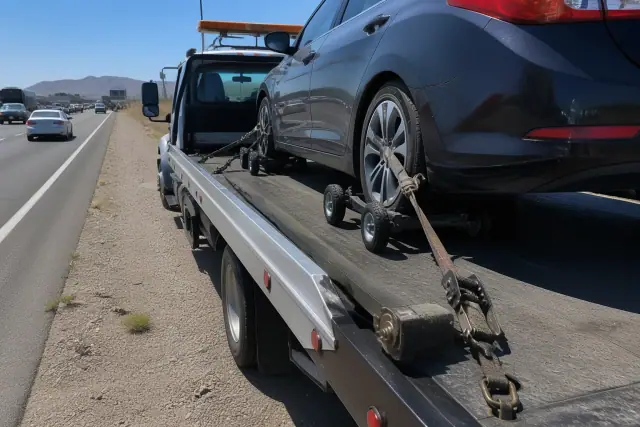
Disabled sedan secured with dollies, winches, and tie-downs on a flatbed truck on a highway shoulder in Tucson, AZ.

Dollies, Winches, and Tie-Downs

Supplemental recovery equipment controls movement when a damaged vehicle cannot roll or sits away from the roadway. Dollies protect compromised wheels, synthetic winch line supports extraction, and axle-rated tie-downs secure transport.

  • Dollies support vehicles with wheel or suspension damage
  • Synthetic winch line enables controlled extraction
  • Straps secure the vehicle after loading
  • Axle-rated tie-downs follow recovery-industry practice
  • Rigging is selected after the scene assessment
Request Estimate
Finding the Right Recovery Method

Choosing the Right Accident Recovery Approach

The scene and the damage determine the recovery plan. A vehicle that rolls safely may allow wheel-lift service, while damaged wheels, suspension, steering, or frame components point toward flatbed loading; off-road and heavy-vehicle incidents require added stabilization and capacity.

Trained Recovery Operators

Our drivers train under WreckMaster-based recovery protocols and arrive with equipment selected for the reported vehicle condition. Trucks operate under current Arizona Department of Transportation motor carrier credentials and commercial insurance.

Documented Vehicle Condition

Scene photos establish vehicle condition before transport. Mileage, arrival time, condition notes, and a signed release at drop-off create a record for the driver, insurer, body shop, or recovery yard.

Local Agency Coordination

When law enforcement is directing a collision scene, our operators confirm that the vehicle is cleared for movement before rigging it. They then follow instructions from responding Arizona Department of Public Safety troopers or Pima County Sheriff's Department deputies.

What Sets Us Apart

Why Tucson Drivers Choose Our Recovery Team

Accident recovery combines roadway judgment, vehicle-specific rigging, and accurate documentation. Our team selects the equipment from the damage, coordinates movement at controlled scenes, and records the vehicle's condition through delivery.

Request Towing Assistance

Vehicle in an Active Traffic Lane

A disabled vehicle on Oracle Road, Ina Road, or another active corridor remains exposed to passing traffic and may obstruct roadway clearance. Recovery moves it only after responding officers clear the vehicle for transport.

Suspension or Wheel Damage

Bent rims, blown tires, a damaged axle, or misaligned suspension can make ordinary rolling unsafe. Flatbed loading or dollies keep damaged components from carrying more road load during transport.

Fluid Leaks and Undercarriage Damage

A punctured radiator, leaking fluids, or a compromised undercarriage changes how the vehicle can be approached and loaded. The operator checks these hazards during the initial walk-around before attaching recovery equipment.

Desert Wash or Ditch Recovery

Vehicles that leave the pavement into a median, roadside ditch, or desert wash need stabilization before they are pulled. Controlled winching limits uncontrolled movement while the vehicle is brought back to a loadable position.

Commercial Vehicle Collisions

Commercial trucks, RVs, and other heavy vehicles require capacity that light-duty tow trucks cannot provide. Heavy wreckers, rotator equipment, and coordinated staging address the weight and complexity of these crash scenes.

Crash-Related Mechanical Failure

A snapped serpentine belt, punctured radiator, or other impact-related failure can leave a vehicle non-running even when the body damage appears limited. Light- or medium-duty towing removes the vehicle from locations such as Speedway Boulevard or near Reid Park.

How It Works

Our Accident Recovery Process

The recovery process begins with accurate dispatch details and continues through scene clearance, inspection, rigging, transport, and documented release. Each step is selected around the vehicle's damage and the instructions controlling the roadway scene.

01.

Share Scene Details

Tell dispatch the location, number of vehicles, and whether the vehicle is drivable or can roll. Those details help route a flatbed, wheel-lift unit, or heavy-duty wrecker before the operator arrives.

02.

Confirm Clearance to Move

At an officer-controlled scene, the operator confirms that responding authorities have cleared the vehicle for movement. No rigging begins until that direction is established.

03.

Inspect and Document Damage

The operator checks fluid leaks, tire blowouts, frame damage, wheel position, suspension condition, and where the vehicle sits. Photos record the vehicle's pre-transport condition.

04.

Select and Rig Equipment

The crew chooses wheel-lift, hydraulic flatbed, dolly, winch, motorcycle, or heavy-wrecker equipment from the assessment. Straps and axle-rated tie-downs secure the vehicle following Towing and Recovery Association of America standard practice.

05.

Extract and Transport Safely

The vehicle is stabilized, extracted, loaded, and transported to our secure yard or the body shop you choose. Equipment inspected against Federal Motor Carrier Safety Administration rigging and load-securement standards supports the move.

06.

Log Arrival and Release Vehicle

At the destination, the operator records mileage, condition, and arrival time. The vehicle is then released with a signed record to you, your insurer, or the repair facility you designated.

Get Accident Recovery Help

Request Accident
Recovery
Assistance

Call with your location, the number of vehicles involved, and whether the damaged vehicle can roll. Dispatch will use those details to route the appropriate towing or recovery equipment and confirm the destination.

Accident Recovery Help

Accident Recovery FAQs

These answers cover immediate safety, vehicle recovery, transport decisions, medical follow-up, insurance communication, and Arizona claim considerations after a collision.

Call Our Dispatch Team

Minor soreness may fade after a day or two, while whiplash, sprains, strains, and concussions can take about six weeks to resolve with proper care. Spinal injuries or fractures may take months depending on severity, so document symptoms early and follow medical advice.

Check for injuries and call 911; Arizona law requires reporting crashes involving injury, death, or significant property damage. Photograph the scene, exchange driver and insurance information, notify your insurer with factual details, and arrange licensed towing before leaving the vehicle unattended.

Adrenaline can mask pain for up to 72 hours, so emergency evaluation is recommended even when you initially feel okay. Follow up with a physician or specialist if pain appears later, and seek immediate emergency care for symptoms such as numbness, severe headache, or chest pain.

Mental recovery varies with the crash and the person's prior experience with anxiety or trauma. Some people feel normal within days, while others have driving anxiety for weeks or months; a counselor or physician can help when anxiety or flashbacks persist.

Typical non-injury settlements may range from $1,000 to $5,000, while many injury claims fall between $10,000 and $50,000. Moderate injuries requiring ongoing treatment may reach $20,000 to $100,000, while severe or permanent injuries can exceed $100,000; actual results depend on medical costs, lost wages, vehicle damage, and liability.

Arizona generally allows two years from the crash date to file a personal injury claim, and property-damage claims typically follow the same two-year window. Because exceptions may change a deadline, preserve records promptly and consult an attorney about your circumstances.

Insurers often review an accident over a three- to five-year window, although the effect depends on fault and severity. The Arizona Department of Transportation Motor Vehicle Division can confirm the details shown on your driving record.

Avoid admitting fault, guessing about the cause, or minimizing injuries before you have been evaluated. Give factual details about the time, place, and sequence of events, and consider legal guidance before a recorded statement when injuries are involved.

Provide your location, the number of vehicles involved, and whether the vehicle is drivable or can roll. These details help dispatch select a wheel-lift unit, hydraulic flatbed, or heavy-duty wrecker before the operator reaches the scene.

Flatbed transport is appropriate when the vehicle cannot roll safely on all four wheels or has bent rims, blown tires, misaligned suspension, visible frame damage, or steering affected by airbag deployment. Loading the full vehicle onto the deck avoids dragging damaged components.

The vehicle can be transported to our secure yard or the body shop you choose. At arrival, the operator logs mileage, condition, and time, then releases it to you, your insurer, or the designated repair facility.

The operator checks fluid leaks, tire and wheel condition, frame or suspension damage, undercarriage condition, vehicle weight, and where the vehicle sits. That assessment determines whether the recovery uses a wheel lift, flatbed, dollies, a winch, motorcycle equipment, or heavy-wrecker capacity.

Dispatch operates 24/7 for accident recovery in Tucson, Oro Valley, Marana, Sahuarita, Green Valley, and the greater Pima County metro area. Service covers local streets, major corridors, and long-distance transport when mileage and timing are confirmed before dispatch.