Proudly serving Tucson, Oro Valley, Marana, Sahuarita, Green Valley, Vail & surrounding areasCall or Text 24/7: +1 (520) 567-5263

Long Distance Towing in Tucson, AZ for Regional Vehicle Transport & Recovery

Tucson Towing Co. provides long distance towing across Tucson and the surrounding Pima County area. We handle emergency towing, roadside assistance, flatbed towing, motorcycle towing, light and medium duty towing, heavy duty towing, accident recovery, and car lockout and jump start service. GPS-equipped flatbeds, medium duty wreckers, and heavy duty recovery units let dispatch match the truck to the vehicle and route. Our coverage includes local pickups, regional hauls, and transport beyond city limits.

A breakdown 80 miles outside Tucson near Benson or along the desert stretch toward the border needs more than a standard local tow. Tucson pavement temperatures regularly exceed 150 degrees in summer, and breakdown calls increase between May and September as tires and batteries fail. Rural pickup points along Highway 86 or Interstate 10 can place a second truck more than an hour away. Providing your exact GPS location, make, model, drivability, and destination helps dispatch send the right equipment the first time.

The dispatch line runs 24 hours a day, seven days a week, and every long haul includes a confirmed ETA, driver contact information, and tracking updates. Drivers hold current commercial licensing recognized by the Arizona Department of Transportation, and the company carries the insurance coverage required for damaged, disabled, and specialty vehicle transport. A free towing quote is provided before dispatch based on mileage and the equipment required.

Tucson Towing Co. provides long distance towing throughout Tucson, Marana, Oro Valley, Sahuarita, Green Valley, and the greater Pima County metro area.

★ ★ ★ ★ ★4.9/5 Average Rating · 20+ Years of Experience · Thousands of Customers Helped · Licensed & Insured · Residential & Commercial

Long Distance Towing Options and Benefits

What Is Long Distance Towing?

Long distance towing moves a vehicle beyond the standard 5-10 mile local radius that many Tucson companies quote at a flat rate. Past that range, pricing typically changes to a per-mile structure, and dispatch must account for vehicle weight, condition, drivability, and route length.

The process starts with a phone assessment covering the pickup point, destination, vehicle type, and condition. Dispatch uses those details to provide a free towing quote, confirm an ETA, plan a legal route around weight restrictions or construction, and select flatbed, medium duty, or heavy duty equipment.

At pickup, the operator records existing vehicle condition and secures the load with rated tie-downs on a GPS-equipped truck. Driver details and status updates remain available throughout the haul. At delivery, the operator walks around the vehicle with you and compares its condition with the pickup notes.

Benefits of Long Distance Towing

A properly planned long-distance tow keeps the vehicle, route, equipment, and communication aligned from pickup through delivery. The service is built around secure loading, clear updates, and documentation rather than leaving you to coordinate each stage separately.

  • Equipment selected for the vehicle's weight and condition
  • Full-deck flatbed protection when the vehicle requires it
  • A confirmed ETA before the truck is dispatched
  • Driver contact details and status updates during the haul
  • Real-time tracking on GPS-equipped transport trucks
  • Rated tie-downs for secure vehicle loading
  • Pickup and delivery condition documentation
  • A free quote based on mileage and equipment needs
Long Distance Towing Services

Towing for Every Vehicle

Tucson's metro area spans roughly 1.08 million residents across Pima County, with travel corridors extending well beyond the city core. Tucson Towing Co. supports passenger cars, motorcycles, trucks, vans, box trucks, RVs, buses, and heavy equipment with scheduled transport or emergency response suited to the vehicle and route.

Emergency Long Distance Towing

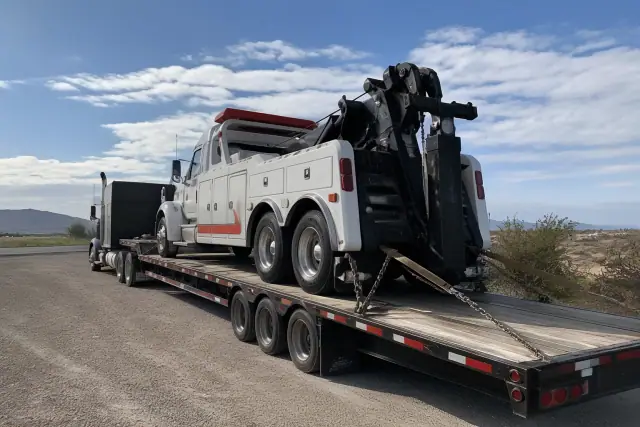
Heavy-duty truck towing a transport trailer at a highway pull-off with Sonoran Desert scenery in Tucson, AZ.

Breakdowns do not wait for business hours, so dispatch covers emergency towing calls 24/7. Whether you are stranded at 2 a.m. on Interstate 19 near Green Valley or during rush hour on Speedway Boulevard, the response begins with your location, vehicle details, destination, and a confirmed ETA.

Request Estimate

Flatbed Vehicle Transport

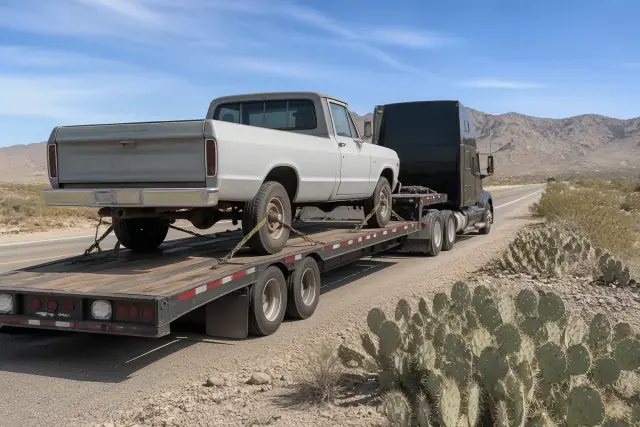
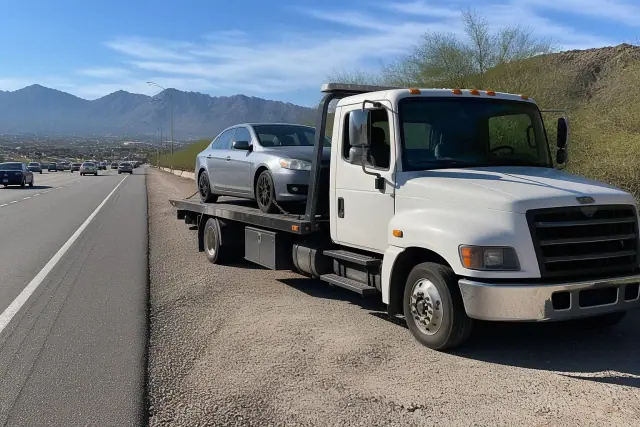
Flatbed transport truck with strapped vehicle parked on a dusty roadside in Tucson, AZ with desert mountains in background.

Flatbed towing loads the entire vehicle onto a level deck instead of leaving two wheels on the pavement. That approach avoids the drivetrain wear, tire scrubbing, and suspension stress associated with dolly or wheel-lift towing over long mileage.

Request Estimate

Heavy Duty Towing

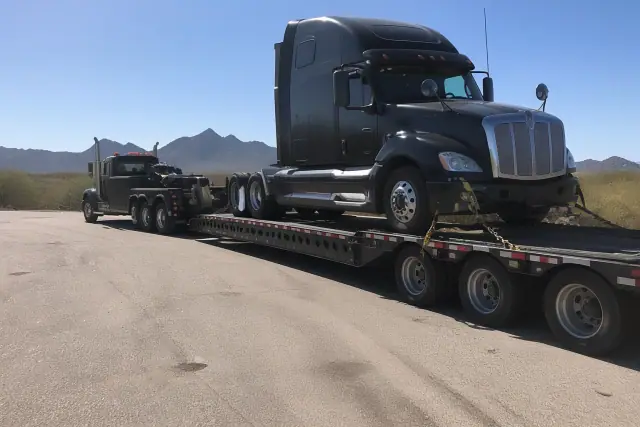
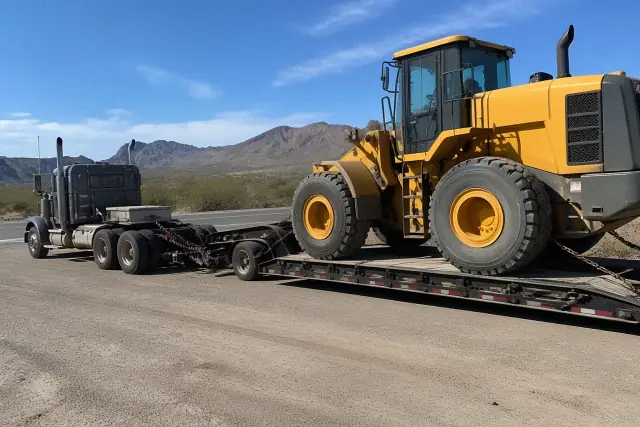
Heavy-duty truck towing a transport trailer secured with straps and chains along a desert road in Tucson, AZ.

Heavy duty towing covers box trucks, RVs, buses, and heavy equipment that exceed standard flatbed capacity. Rotating booms, air-ride systems, load-rated chains, and commercial air-brake equipment support the rigging and recovery demands of these larger vehicles.

Request Estimate

Accident Recovery Towing

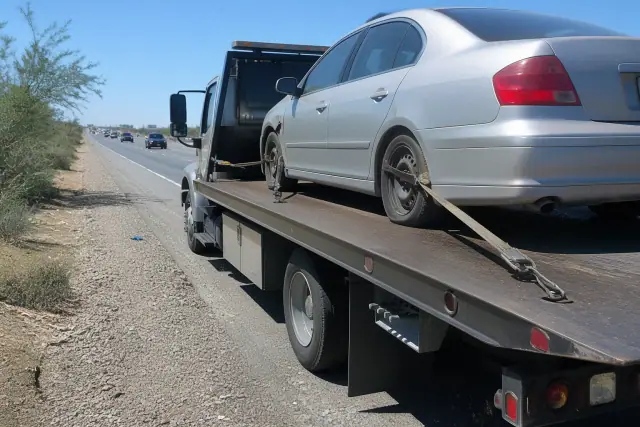
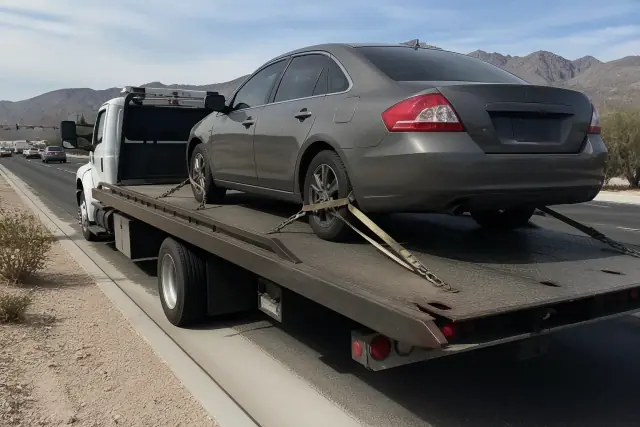
Flatbed tow truck with a secured disabled sedan on a roadside in Tucson, AZ.

Collision recovery starts with an assessment of airbag deployment, fluid leaks, frame damage, and wheel or axle damage before loading. Operators coordinate the destination with responding officers and insurance adjusters, then document vehicle condition at pickup and delivery.

Request Estimate

Motorcycle Towing

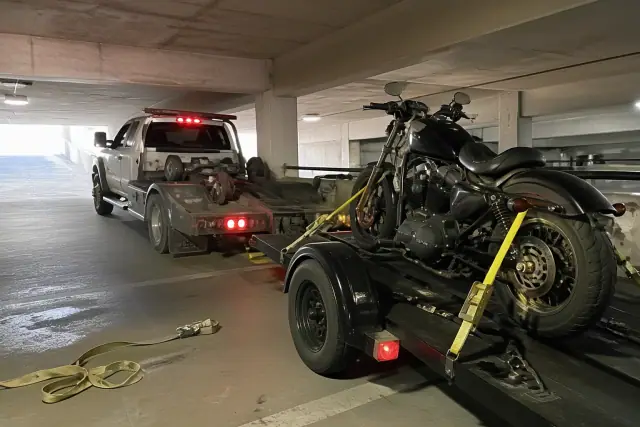
Motorcycle secured with ratchet straps on a trailer in a concrete parking garage in Tucson, AZ.

Motorcycles travel on a flatbed with wheel chocks and soft-tie restraints designed to avoid frame or fork damage. The loading process differs from standard car towing, so the motorcycle is secured with equipment suited to its balance points and exposed components.

Request Estimate

Roadside Assistance

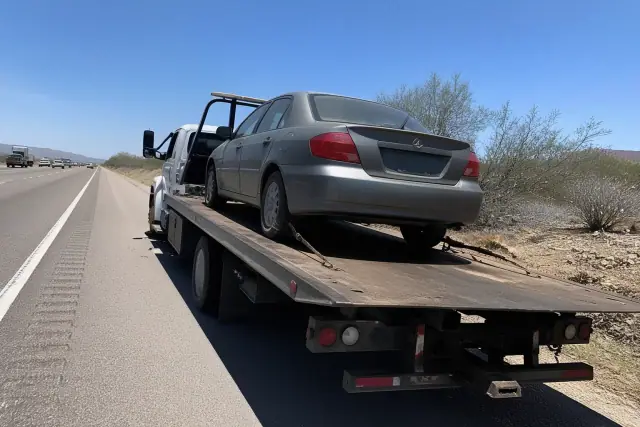
Flatbed tow truck with a disabled sedan on the highway shoulder in the Tucson, AZ desert.

Jump starts, lockouts, fuel delivery, and tire changes can often resolve a roadside problem without a full tow. Trucks carry tools for these common fixes, while dispatch can arrange long-distance transport when the vehicle still cannot continue safely.

Request Estimate
Vehicle and Transport Options

Equipment Matched to Your Tow

Vehicle class, weight, condition, drivability, and route determine which truck should handle the job. Matching the equipment correctly helps control cost, avoids equipment strain, and gives damaged or specialty vehicles the support they need for a long haul.

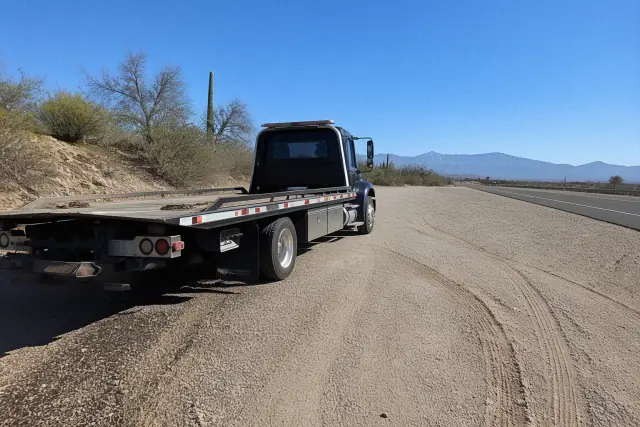
Heavy-duty truck with a flatbed transport trailer parked on a highway pull-off in Tucson, AZ.

Flatbed Transport

A flatbed carries the complete vehicle off the pavement and is the safest method described for many long-distance moves. It is especially useful when the drivetrain, suspension, ground clearance, or damaged wheels make wheel-lift towing unsuitable.

  • All-wheel-drive vehicles
  • Lowered cars with limited ground clearance
  • Vehicles with transmission damage
  • Accident vehicles with wheel or axle damage
  • Motorcycles secured with wheel chocks and soft ties
Request Estimate
A flatbed truck transporting a secured sedan on a roadside in Tucson, AZ with desert mountains in the background.

Light Duty Towing

Light duty towing is intended for standard passenger vehicles that do not require the capacity of a larger wrecker. Dispatch still considers the vehicle's condition and the distance involved before selecting the truck.

  • Standard passenger cars
  • Compact vehicles
  • Small SUVs
  • Scheduled vehicle relocations
  • Emergency transport beyond the local service radius
Request Estimate
A flatbed tow truck with a disabled sedan secured on the back, parked on a roadside in Tucson, AZ with mountain views.

Medium Duty Towing

Medium duty wreckers handle vehicles that are larger than a passenger car but do not require heavy duty recovery equipment. The right truck class supports safe transport while helping fleet operators avoid unnecessary equipment costs.

  • Larger pickup trucks
  • Full-size vans
  • Small commercial vehicles
  • Scheduled fleet relocations
  • Emergency roadside transport for commercial trucks
Request Estimate
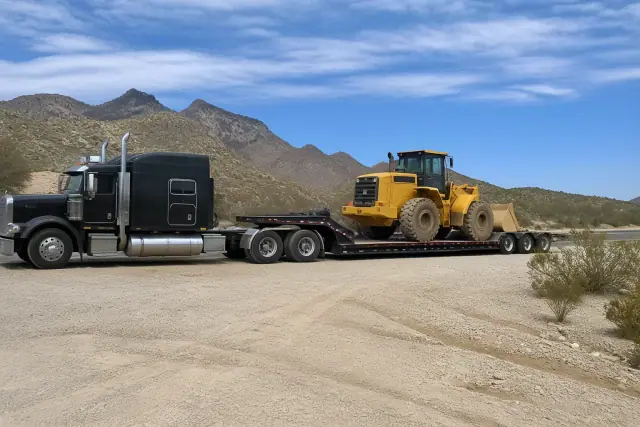
Heavy-duty tow truck and transport trailer parked in the Tucson, AZ desert with mountain views.

Heavy Duty Equipment

Heavy duty units are rated for gross vehicle weights beyond passenger-vehicle towing. Operators use specialized rigging and recovery equipment to move large vehicles and machinery while meeting the demands of the load and route.

  • Box trucks
  • RVs and buses
  • Heavy equipment
  • Rotating boom recovery units
  • Load-rated chains and commercial air-brake systems
Request Estimate
Heavy-duty truck towing a long-distance transport trailer on the side of a road in Tucson, AZ with desert mountain views.

Specialty and Roadside Support

Not every stranded vehicle needs the same response. Motorcycle restraints address specialty transport, while common roadside tools can solve a lockout, battery, fuel, or tire problem before a tow becomes necessary.

  • Motorcycle wheel chocks
  • Soft-tie motorcycle restraints
  • Car lockout assistance
  • Battery jump starts
  • Fuel delivery and tire changes
Request Estimate
Finding the Right Fit

Choosing the Right Towing Approach

The right approach begins with the vehicle's weight, condition, drivability, pickup location, and destination. Dispatch also accounts for route difficulty, bridge weight restrictions, construction zones along Interstate 10, and whether flatbed loading or specialized rigging is required.

Fleet Matched to the Vehicle

GPS-equipped flatbeds, medium duty wreckers, and heavy duty recovery units give dispatch practical options for different vehicle classes. The truck is chosen from the vehicle's weight and condition as well as the mileage and route.

Confirmed Updates From Dispatch

Each long-distance dispatch includes a confirmed ETA, driver contact information, and tracking updates. You can request status information throughout the haul instead of wondering where the vehicle is between pickup and delivery.

Commercial Licensing and Insurance

Drivers hold current commercial licensing recognized by the Arizona Department of Transportation. Tucson Towing Co. also carries the insurance coverage required to transport damaged, disabled, and specialty vehicles across Pima County and beyond.

Prepared for the Road Ahead

Why Choose Tucson Towing Co. for Long Distance Towing?

A long haul starts with a clear quote, a confirmed ETA, and equipment selected for the actual vehicle and route. Rated tie-downs, GPS-equipped trucks, driver communication, and pickup-to-delivery condition records create a documented transport process from the first call through the final walkaround.

Get a Free Towing Quote

Breakdowns Beyond Local Tow Range

A standard local tow cannot solve a breakdown far outside Tucson or along a rural desert highway. On stretches such as Highway 86 or near Redington Pass, a replacement truck may be more than an hour away, so accurate pickup details matter before dispatch.

Heat-Related Tire and Battery Failure

Tucson's summer pavement temperatures regularly exceed 150 degrees, affecting tire integrity and battery failure rates. Breakdown calls rise between May and September, making vehicle condition and a precise GPS location important when arranging a tow.

All-Wheel-Drive or Lowered Vehicles

All-wheel-drive vehicles, lowered cars, and vehicles with transmission damage need full-deck flatbed transport. Keeping all wheels off the pavement avoids drivetrain wear, tire scrubbing, and suspension stress over long mileage.

Collision Damage and Fluid Leaks

Airbag deployment, fluid leaks, frame damage, and damaged wheels or axles change how an accident vehicle can be loaded. Operators assess these conditions first, use suitable flatbed equipment, and document the vehicle before transport.

Commercial Vehicle Downtime

A disabled truck, van, or piece of heavy equipment can interrupt contractor, dealership, and fleet schedules. Direct coordination with fleet managers on documentation, destination, and timing helps organize either scheduled relocation or emergency transport.

Monsoon and Desert Road Conditions

Monsoon season runs roughly June through September and can bring flash flooding, haboobs, and reduced visibility to desert highways. A flatbed keeps the vehicle fully secured and off unstable roadside shoulders near wash areas such as the Santa Cruz River corridor.

How It Works

Our Long Distance Towing Process

Long-distance transport is organized around six clear stages, from the first vehicle assessment to the final delivery inspection. Each step keeps the equipment choice, route, vehicle condition, and customer communication documented.

01.

Call With Trip Details

Provide the exact GPS pickup location, destination, vehicle make and model, and whether the vehicle is drivable. Dispatch also asks about damage or conditions that could affect loading.

02.

Confirm the Quote and ETA

The phone assessment produces a free towing quote based on mileage and the equipment required. Dispatch confirms the ETA before a truck leaves for the pickup.

03.

Plan the Route and Equipment

Dispatch maps the most direct legal route and considers bridge weight restrictions and construction zones. A flatbed, medium duty wrecker, or heavy duty recovery unit is then matched to the vehicle.

04.

Document and Secure the Vehicle

The operator records pre-existing damage before loading and secures the vehicle with rated tie-downs. Damaged vehicles receive added attention to wheels, axles, fluid leaks, airbags, and frame condition.

05.

Track the Transport

The haul is logged on a GPS-equipped truck, and you receive the driver's contact details. Status updates remain available during transport so you can follow progress toward the destination.

06.

Complete the Final Inspection

At delivery, the operator walks around the vehicle with you and compares its condition with the pickup notes. Before-and-after documentation supports the chain of custody if a damage claim ever needs review.

Plan Your Transport

Request a Long Distance Towing Quote

Call with the pickup point, destination, vehicle make and model, and drivability status to receive a free quote and confirmed ETA. Those details help dispatch choose the right truck and route before transport begins.

Long Distance Towing Help

Long Distance Towing FAQs

These answers cover pricing, Arizona towing rules, equipment selection, roadside options, and the information dispatch needs for a long-distance haul. Call if your vehicle or route requires a more specific assessment.

Call Dispatch

Arizona statutes regulate commercial licensing, insurance, notification requirements, and vehicle-release procedures for towing companies. Non-consensual private-property tows require specific signage and law-enforcement notification, while accident recovery and law-enforcement-directed tows require proper documentation.

Once a tow is past the local base radius, the general Tucson range described is $2.50 to $5 per mile. Tows of 50 miles or more commonly land between $200 and $400, while longer interstate hauls of 100+ miles can reach $600 or more depending on vehicle type. For a car towed 100 miles or more, a broad estimate is $250 to $600+, with vehicle weight, flatbed needs, route difficulty, and after-hours dispatch affecting the final quote.

A standard local tow in Tucson generally falls between $75 and $160 for the first several miles. Additional mileage is billed beyond that base distance, and the vehicle type, time of day, and need for flatbed or heavy duty equipment can change the total.

Call with the exact pickup location, destination, vehicle make and model, and whether the vehicle is drivable. Dispatch confirms the quote and ETA before the truck leaves, then provides driver details and tracking updates during the haul. Having the destination address and insurance information ready can speed up the process.

Tucson towing operations fall under Arizona regulations and local ordinances addressing private-property tows, abandoned vehicles, and accident-scene recovery. Commercial licensing and insurance are required, notification and signage rules apply to non-consensual private-lot tows, and law-enforcement coordination applies to accident or impound-related transport.

The source describes no fixed legal maximum distance for towing in Arizona. Practical limits depend on commercial driver hours-of-service requirements and the logistics of the route, vehicle, and destination. Regional and out-of-state transport can be arranged when the equipment and trip plan fit the job.

The 80% rule is a towing-capacity guideline under which the load stays at roughly 80% or less of the tow vehicle's or equipment's rated capacity to preserve a safety margin. Dispatch accounts for capacity when selecting medium duty or heavy duty equipment.

Long distance towing generally begins beyond the standard 5-10 mile local radius that many Tucson companies quote at a flat rate. At that point, pricing commonly moves to a per-mile structure and equipment selection becomes more important.

Flatbed transport is required for all-wheel-drive vehicles, lowered cars, vehicles with transmission damage, and accident vehicles with wheel or axle damage. It keeps every wheel off the pavement, avoiding drivetrain wear, tire scrubbing, and suspension stress over long mileage.

Yes. The described method uses flatbed transport with wheel chocks and soft-tie restraints to protect the frame and forks. Motorcycle loading follows a different securing process from standard car towing.

Heavy duty towing is used for box trucks, RVs, buses, and heavy equipment that exceed standard flatbed capacity. These jobs can require rotating booms, air-ride systems, load-rated chains, specialized rigging, and commercial air-brake equipment.

Roadside assistance includes battery jump starts, car lockouts, fuel delivery, and tire changes. These services can often return a vehicle to the road without towing; if they cannot, dispatch can arrange the appropriate transport.

Long-distance hauls use GPS-equipped trucks and include driver contact information plus status updates. The operator documents vehicle condition at pickup, secures it with rated tie-downs, and completes a final walkaround against the pickup notes at delivery.