Proudly serving Tucson, Oro Valley, Marana, Sahuarita, Green Valley, Vail & surrounding areasCall or Text 24/7: +1 (520) 567-5263

Emergency Towing in Tucson, AZ for Accident Recovery & Long Distance Vehicle Transport

Tucson Towing Co. provides emergency towing and roadside assistance across Tucson, Arizona. Our crews handle flatbed towing, motorcycle towing, light-, medium-, and heavy-duty towing, accident recovery, long-distance transport, and car lockout or jump-start calls. Drivers operate flatbeds, wheel-lift wreckers, and medium- and heavy-duty rotators to match the vehicle and recovery conditions. Service is available throughout the greater Tucson area.

A breakdown on I-10 in summer heat or during monsoon flooding can leave a driver exposed near fast-moving traffic. We use real-time GPS dispatch to route the closest available truck and provide a realistic arrival window based on location and call volume. Operators are trained on Federal Motor Carrier Safety Administration J-hook and chain load-securement standards and Arizona Department of Public Safety Tow Service Program requirements. Before the truck rolls, we give a straight answer on cost based on the service and vehicle details.

Tucson Towing Co. operates 24/7 because roadside exposure can intensify when pavement temperatures push past 150 degrees or shoulder traffic moves 65 miles per hour or more.

Tucson Towing Co. provides emergency towing in Tucson, Marana, Oro Valley, South Tucson, Sahuarita, and the surrounding Pima County area.

★ ★ ★ ★ ★4.9/5 Average Rating · 20+ Years of Experience · Thousands of Customers Helped · Licensed & Insured · Residential & Commercial

Emergency Towing Options & Benefits

What Emergency Towing Includes

Emergency towing starts with one call for a disabled, damaged, or stranded vehicle. The dispatch operation is built around keeping motorists in Sonoran Desert heat from facing a two-hour wait, although the actual arrival window depends on location and current call volume.

Dispatch matches dead batteries, blown tires, overheated engines, transmission failures, collisions, and flood-related no-starts to the right equipment. Depending on the vehicle and conditions, that may mean a flatbed, wheel-lift wrecker, dolly, winch, or heavy-duty rotator.

After an on-site assessment, the driver secures the vehicle and transports it to your home, a repair shop, or a storage yard. The final invoice reflects the mileage and service type used for the recovery.

Benefits of Professional Emergency Towing

Arizona's Move Over Law under A.R.S. 28-624 requires drivers to shift lanes or slow down for stopped roadside vehicles, but fast, careful clearance still reduces exposure beside active traffic. Federal labor data places the tow-operator fatality rate at nearly 43 per 100,000 workers, making scene visibility, correct equipment, and efficient recovery essential.

  • Around-the-clock towing and roadside assistance
  • GPS routing to the closest available truck
  • Flatbed, wheel-lift, dolly, winch, and rotator options
  • Flatbed centering and securement at four points with soft straps or wheel nets
  • Cones and reflective markers for collision-scene visibility
  • Vehicle-condition photographs and pickup documentation
  • Cost confirmation before dispatch
  • Coverage across Tucson and surrounding Pima County communities
Tucson Towing Services

Emergency Towing Services

From a no-start in a parking lot to a commercial vehicle blocking an interstate lane, each call requires a different response. Tucson Towing Co. combines towing, recovery, and roadside services so dispatch can select the safest practical solution for the vehicle and location.

24/7 Emergency Towing

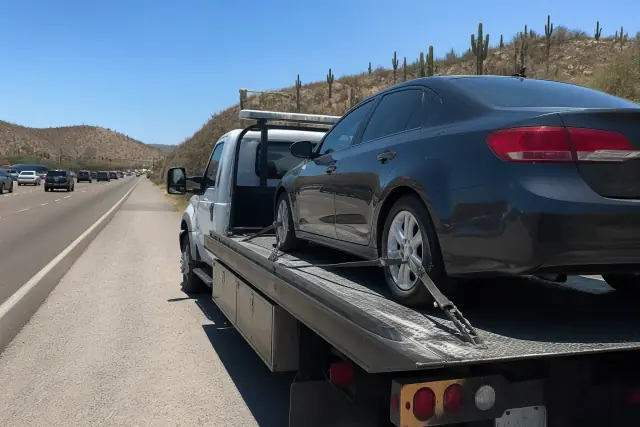
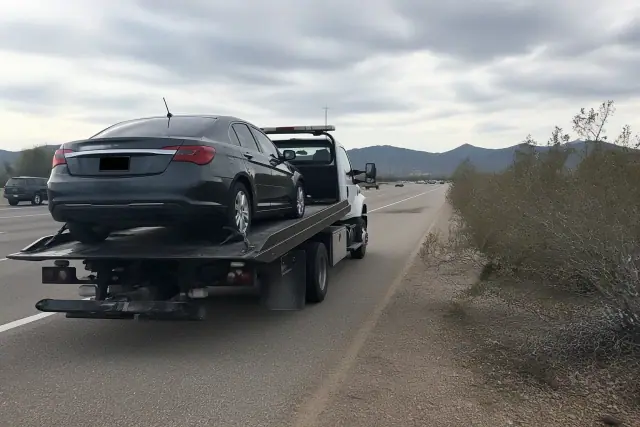
A flatbed tow truck with a disabled sedan on the side of a road near desert foothills in Tucson, AZ.

Round-the-clock dispatch covers breakdowns on the I-10/I-19 interchange, Speedway Boulevard, Gates Pass, and streets across the Tucson area. Separate staging for the east side and northwest near Marana helps avoid sending a single truck across the entire valley.

Request Estimate

Flatbed Towing

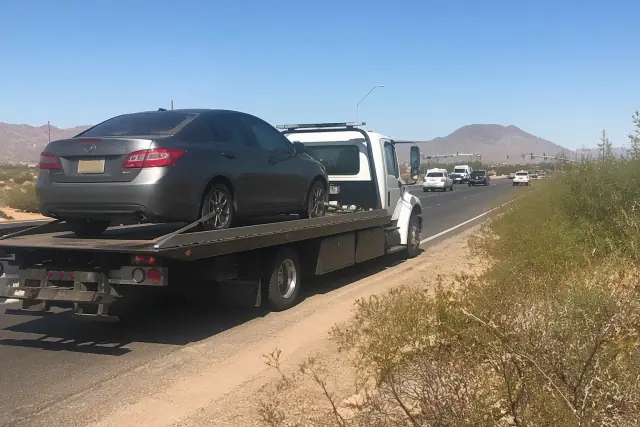
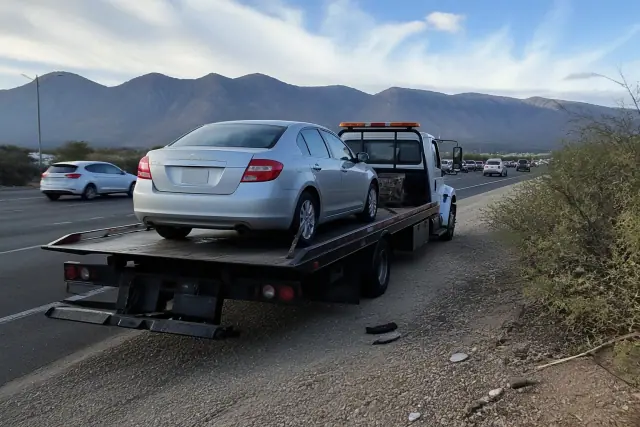
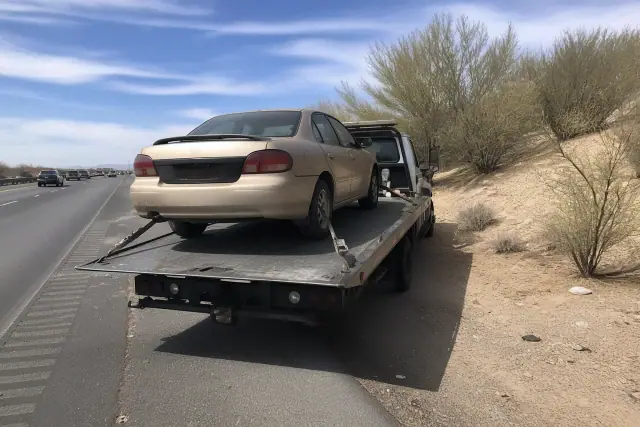
A flatbed tow truck with a disabled sedan on the back parked on a roadside in Tucson, AZ, with desert mountains.

Flatbed transport protects all-wheel-drive and four-wheel-drive vehicles, low-clearance sports cars, and vehicles with drivetrain or transmission damage. Soft straps or wheel nets secure the wheels without placing chains against the body.

Request Estimate

Accident Recovery

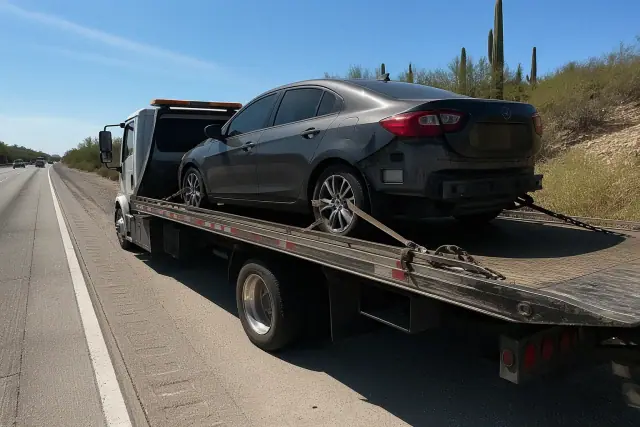
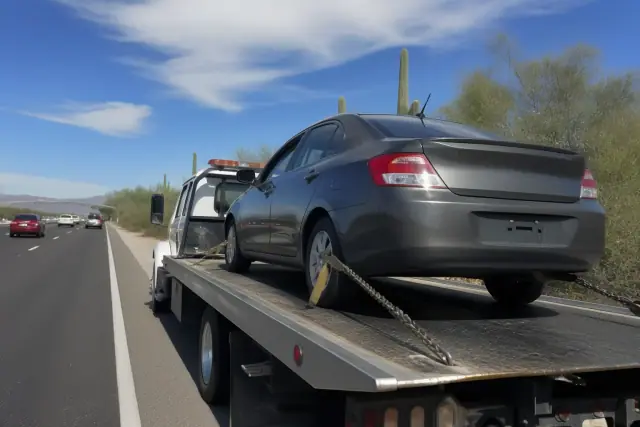
Flatbed truck with a disabled sedan on a highway shoulder in Tucson, AZ, with saguaro cacti in the background.

Collision recovery begins with checks for fluid leaks, unstable positioning, and airbag-deployment hazards. Drivers document the vehicle's condition at pickup, then use towing, winching, or rotator equipment appropriate for the scene.

Request Estimate

Roadside Assistance

A flatbed tow truck with a disabled sedan on the highway shoulder in Tucson, AZ with desert mountains in the background.

Many calls can be resolved without towing. Crews provide jump starts, fuel delivery, spare-tire changes, lockout service, and roadside diagnosis before deciding whether the vehicle needs transport.

Request Estimate

Car Lockout & Jump-Start Service

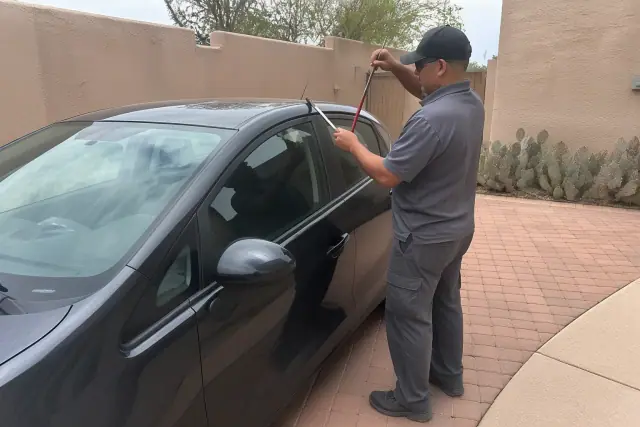
Technician using a lockout tool on a car door in a suburban driveway in Tucson, AZ.

Technicians use non-destructive lockout tools designed to protect door panels and window seals. For batteries weakened by Tucson's extreme summer heat, crews carry jump boxes and cables to attempt a roadside restart.

Request Estimate

Commercial & Fleet Towing

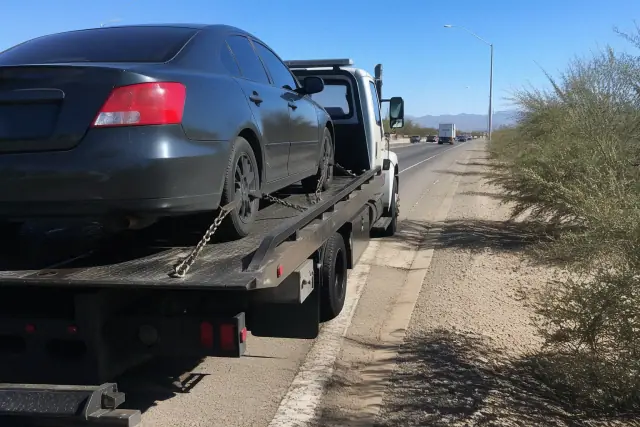
Flatbed tow truck with a secured sedan on a busy road in Tucson, AZ, featuring safety chains and desert vegetation.

Commercial towing covers box trucks, semi-tractors, buses, and fleet vehicles. Fleet accounts receive priority dispatch during business-critical breakdowns, while medium- and heavy-duty crews coordinate complex interstate recoveries with Arizona Department of Public Safety officers when needed.

Request Estimate
Equipment for the Vehicle

Towing Equipment & Transport Options

Vehicle size, drivetrain, damage, access, and destination determine the towing method. The fleet spans light-, medium-, and heavy-duty categories, along with equipment for motorcycles and long-distance flatbed transport.

Flatbed tow truck loading a disabled sedan on a roadside in Tucson, AZ with desert mountains in the background.

Light-Duty Towing

Light duty is the first of the three broad towing categories and serves passenger cars and small SUVs. Dispatch can choose a standard wheel-lift or flatbed based on drivetrain, ground clearance, and damage.

  • Passenger cars and compact sedans
  • Small SUVs
  • Wheel-lift towing when conditions allow
  • Flatbed transport for sensitive drivetrains
  • Roadside diagnosis before towing
Request Estimate
A flatbed tow truck with a disabled sedan secured on the highway shoulder in Tucson, AZ, surrounded by creosote bushes.

Medium-Duty Towing

Medium-duty wreckers handle larger trucks and vans that exceed light-duty equipment needs. The service supports commercial and fleet vehicles while accounting for vehicle weight, access, and recovery conditions.

  • Larger trucks and vans
  • Box trucks
  • Fleet vehicles
  • Medium-duty wrecker equipment
  • Weight- and access-based dispatch
Request Estimate
Flatbed tow truck with a disabled sedan on the side of a highway in Tucson, AZ.

Heavy-Duty Towing

Heavy-duty wreckers and rotators are used for commercial trucks, buses, RVs, oversized loads, and complex recoveries. Rotator equipment can lift and reposition vehicles that a standard wrecker cannot reach or right.

  • Semi-tractors
  • Buses and RVs
  • Jackknifed trailers
  • Rolled or off-road vehicles
  • Multi-vehicle interstate recovery
Request Estimate
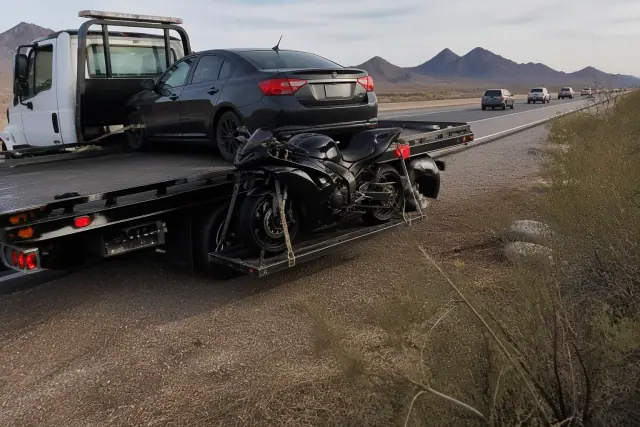
Flatbed tow truck with a sedan and a strapped motorcycle on the highway shoulder in Tucson, AZ with desert mountains.

Motorcycle Towing

Motorcycles are loaded with ramps, wheel chocks, and soft-tie straps designed for frames rather than engine or plastic components. This method supports sport bikes, cruisers, and touring motorcycles on roads from Mount Lemmon to Gates Pass.

  • Motorcycle-specific loading ramps
  • Wheel-chock stabilization
  • Soft-tie frame securement
  • Tip-over risk reduction during loading
  • Care for sport, cruiser, and touring bikes
Request Estimate
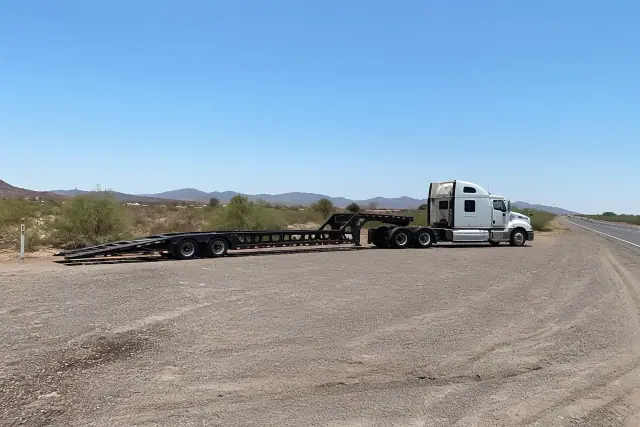
A heavy-duty truck with a long-distance transport trailer parked on a dusty roadside in Tucson, AZ.

Long-Distance Towing

Long-distance flatbed towing covers interstate, out-of-state, relocation, vehicle-purchase, and dealership-transfer needs. A trip from Tucson to a dealership in Phoenix is about 108 miles northwest, so total distance, vehicle weight, and equipment needs are confirmed before dispatch.

  • I-10 and I-19 transport routes
  • Flatbed transport to prevent vehicle wear
  • Strap-tension checks at fuel stops
  • Progress updates on multi-hour moves
  • Per-mile pricing confirmed before dispatch
Request Estimate
Matching Vehicle and Equipment

Choosing the Right Towing Approach

The right recovery approach starts with accurate location, vehicle, and problem details. GPS-based dispatch, equipment matching, and cost confirmation help the driver arrive prepared for anything from a simple wheel-lift tow to a flatbed-only drivetrain recovery or heavy-duty rotator job.

GPS-Based Dispatch

Dispatch pings the closest available truck instead of working from a fixed schedule. Staging near the east side, Davis-Monthan Air Force Base, and northwest Tucson helps produce a realistic arrival window without routing every call through one location.

Right Truck for the Job

Vehicle type and failure details determine whether dispatch sends a flatbed, wheel-lift wrecker, medium-duty unit, or heavy-duty rotator. That decision is made before arrival whenever possible, reducing guesswork at the scene.

Upfront Cost Confirmation

The dispatcher explains how distance, vehicle weight, access, and equipment affect the cost before the truck rolls. After service, the invoice identifies the mileage and tow or recovery type used.

What Sets Us Apart

Why Choose Our Emergency Towing Team?

Tucson Towing Co. carries commercial auto liability coverage, and its vehicles and drivers are registered in compliance with Arizona Revised Statutes Title 28 towing provisions. Operators are trained on J-hook and chain load securement and the state Tow Service Program requirements that apply to Arizona towing work.

Request Towing Details

Dead Battery

Extreme summer heat can shorten battery life, allowing a battery that tested well in spring to fail by August. A technician can attempt a jump start with carried jump boxes and cables before recommending a tow.

Blown Tire

A blown or unusable tire may be resolved by installing the vehicle's spare. If a safe roadside change is not practical or no usable spare is available, dispatch can arrange the appropriate tow.

Overheated Engine

Summer heat soak can leave an engine overheated and a vehicle unable to continue safely. Roadside assessment helps determine whether the problem can be addressed at the scene or requires transport to a repair shop.

Collision Damage

Damaged vehicles may have fluid leaks, unstable positioning, deployed airbags, or evidence that law enforcement still needs to document. Recovery crews protect the scene, photograph condition at pickup, and provide paperwork showing time, location, and arrival condition.

Flood-Related No-Start

Monsoon flooding can push water into a vehicle's electrical systems and cause a no-start. Dispatch uses the reported location and vehicle condition to determine whether flatbed transport or another recovery method is appropriate.

Off-Road & Difficult Recovery

Vehicles can leave the roadway near the Santa Cruz River wash, drainage channels, desert embankments, or soft sand around Tucson's outskirts. Winches and rigging recover vehicles from ditches and rollover positions, while a rotator can reach or reposition loads beyond a standard wrecker's capability.

How It Works

Our Emergency Towing Process

The process moves from location and vehicle details to equipment selection, GPS dispatch, scene assessment, and secure transport. Clear information at the first call helps the driver arrive with the equipment the recovery requires.

01.

Share Your Location

Provide an address, cross streets, or a recognizable nearby point. On I-10, a frontage road, or another location without a clear street address, dispatch can use mile markers and cross streets to pinpoint the vehicle.

02.

Describe the Vehicle and Problem

Tell dispatch the vehicle type and whether the issue is a flat tire, accident, no-start, drivetrain problem, or another condition. These details narrow the equipment and recovery method before a truck is assigned.

03.

Match the Correct Truck

Dispatch selects a flatbed, wheel-lift wrecker, dolly-equipped unit, medium-duty wrecker, or heavy-duty rotator. All-wheel drive, low clearance, vehicle weight, damage, and access all influence the match.

04.

Dispatch by GPS

The dispatcher pings the closest available suitable truck and provides a realistic arrival window. Timing varies with the call location and current volume rather than following a fixed schedule.

05.

Assess the Scene

On arrival, the driver checks the vehicle's position, damage, fluid leaks, and other hazards before moving it. At collision scenes, cones and reflective markers help protect the work area from approaching traffic.

06.

Secure and Transport

The driver secures the vehicle using the appropriate J-hook, chain, soft-strap, wheel-net, or motorcycle tie-down method. The vehicle then travels to the requested home, repair shop, or storage yard, followed by an invoice reflecting mileage and service type.

Get Roadside Help

Request Emergency Towing Service

Share your location, vehicle type, and roadside problem so dispatch can identify the right equipment and explain the cost. For urgent roadside help, call Tucson Towing Co. at any hour.

Tucson Towing Help

Emergency Towing FAQs

These answers cover Tucson towing costs, roadside help, Arizona towing rules, vehicle categories, equipment choices, and long-distance transport. Call dispatch with your location and vehicle details for information specific to your situation.

Call Our Dispatch Team

Pricing depends on distance, vehicle type, and time of day. A standard local tow within 5 to 10 miles typically runs $75 to $125, with additional mileage charged separately. Tucson Towing Co. confirms the total cost before dispatch.

Recoveries involving winching, difficult terrain, or accident scenes generally cost more than a standard tow. Expect a rough range of $125 to $275 for recoveries up to 40 miles and $600 or more for recoveries extending toward 100 miles. Vehicle weight, access, and rotator or winch needs affect the final price.

Tucson Towing Co. provides jump starts, lockout service, fuel delivery, and tire changes throughout the metro area. Staging points across the city support calls near downtown, the University of Arizona, and out toward Vail, with the nearest available suitable truck assigned through dispatch.

Arizona does not offer a state-run free roadside assistance program for the general public. Insurance add-ons, manufacturer warranties, or membership programs may include a set number of tows within a mileage limit as part of an annual fee. Without that coverage, roadside assistance and towing are paid per call.

Arizona towing is governed under Arizona Revised Statutes Title 28 and overseen in part by the Arizona Department of Public Safety Tow Service Program. Within Tucson city limits, the Private Property Towing Ordinance addresses maximum towing, after-hours, and storage charges at current DPS rates and requires standardized warning signage on private lots.

On private property, Arizona law generally requires posted signage before a parking-violation tow, and Tucson's ordinance reinforces that requirement within city limits. Vehicles blocking traffic, involved in accidents, or abandoned on a public roadway may be towed by law-enforcement order without prior notice, with the owner typically notified afterward.

The three broad categories are light duty for passenger cars and small SUVs, medium duty for larger trucks and vans, and heavy duty for commercial trucks, buses, and oversized vehicles. Equipment ranges from wheel-lift and flatbed trucks to medium-duty wreckers and heavy-duty rotators.

All-wheel-drive and four-wheel-drive vehicles, low-clearance sports cars, and vehicles with drivetrain or transmission damage may require flatbed transport. Towing an all-wheel-drive vehicle on two wheels can damage the transfer case, so the company defaults to a flatbed when there is doubt.

A jump start, fuel delivery, car lockout, or spare-tire change may get the vehicle moving without transport. A technician can also assess a no-start at the roadside before deciding whether towing is necessary.

Motorcycles are loaded onto flatbeds with motorcycle-specific ramps and chock systems. Soft-tie straps attach at the frame rather than engine or plastic components, reducing stress on forks, fairings, and body panels during transport.

Heavy-duty towing covers semi-tractors, buses, RVs, oversized loads, jackknifed trailers, and vehicles that have rolled off the roadway. Rotator recovery can lift and reposition vehicles that a standard wrecker cannot reach or right.

If you are on I-10, a frontage road, or another location without a clear address, provide the nearest mile marker and cross streets. Dispatch uses those details with GPS tracking to identify your position and route the closest available suitable truck.

Long-distance rates are calculated per mile, with the total confirmed before dispatch. Distance, vehicle weight, and whether the move requires flatbed or wheel-lift equipment all affect the final price.