Proudly serving Tucson, Oro Valley, Marana, Sahuarita, Green Valley, Vail & surrounding areasCall or Text 24/7: +1 (520) 567-5263

Medium Duty Towing in Tucson, AZ for Box Trucks, Delivery Vans & Commercial Fleets

Tucson Towing Co. provides medium duty towing in Tucson for box trucks, delivery vans, passenger buses, and light construction equipment. We also handle flatbed towing, roadside assistance, and accident recovery for commercial and fleet vehicles across the metro area. Our medium duty rigs serve vehicles in the 10,000 to 26,000 pound class. Wheel-lift and flatbed equipment is sized for that weight range so a commercial vehicle is not forced onto passenger-car towing gear.

Tucson's desert heat, freeway traffic, and foothill grades put extra strain on loaded commercial vehicles. Light-duty tow trucks are not built for the weight of a moving truck, shuttle bus, or loaded cargo van. Our operators match the vehicle with hydraulic wheel-lift or reinforced flatbed equipment before hookup. That equipment choice helps protect the frame, transmission, and drivetrain during recovery and transport.

Our fleet is registered through the Arizona Department of Transportation, carries on-hook and cargo insurance, and operates under the licensing Pima County requires of commercial tow operators. Dispatch runs continuously, 24 hours a day and seven days a week.

Tucson Towing Co. provides medium duty towing throughout Tucson and nearby service areas, including Oro Valley, Marana, South Tucson, and the greater Pima County metro area.

★ ★ ★ ★ ★4.9/5 Average Rating · 20+ Years of Experience · Thousands of Customers Helped · Licensed & Insured · Residential & Commercial

Medium Duty Towing Options & Benefits

What Is Medium Duty Towing?

Medium duty towing fills the gap between passenger-car recovery and full tractor-trailer transport. It covers vehicles weighing between 10,000 and 26,000 pounds, including box trucks, delivery vans, large passenger vans, small buses, and some light construction equipment.

Hydraulic wheel-lift systems and reinforced flatbed decks provide the capacity needed for this class. Equipment rated beyond the vehicle's weight leaves room for cargo and attached equipment while keeping the hookup within the tow rig's working limits.

This service is the right choice when a vehicle is heavier than a standard pickup but is not a full tractor-trailer. Matching the tow truck to the vehicle helps avoid the frame, transmission, and drivetrain damage that can result from an undersized hookup.

Benefits of Weight-Matched Towing

The main benefit of medium duty towing is control: the tow rig, loading method, securement, and route can all be matched to a heavier commercial vehicle instead of relying on passenger-car equipment.

  • Equipment selected for the 10,000 to 26,000 pound vehicle class
  • Flatbed transport that keeps all four wheels off the road
  • Multi-point securement with at least four tie-down points
  • Non-skid decks and chains that meet Department of Transportation working load limit standards
  • Real-time truck location tracking for closer dispatch
  • Continuous dispatch for breakdowns outside normal business hours
  • Photos and itemized service records for accident tows
  • Firm quotes based on distance, vehicle class, and required equipment
Commercial Vehicle Towing

Medium Duty Towing Services

Tucson's metro population of roughly 1.08 million residents supports delivery fleets, contractor trucks, shuttles, and service vehicles moving throughout the region each day. Our medium duty services cover the commercial vehicle types and recovery situations that fall between light-duty towing and full heavy-duty transport.

Box Truck and Moving Truck Towing

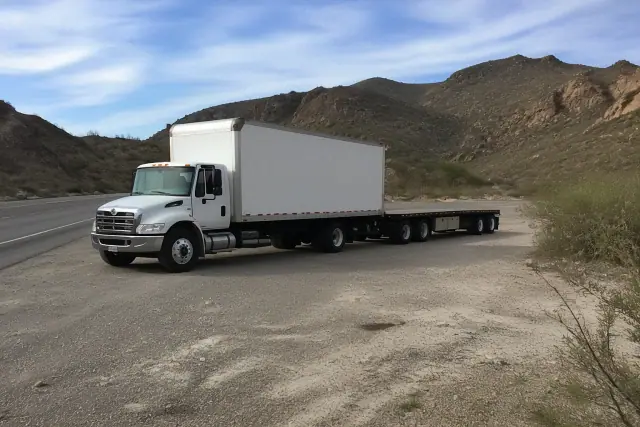
A heavy-duty truck towing a large transport trailer parked in a desert pull-off area in Tucson, AZ.

Loaded box trucks and moving trucks require a tow rig sized for both the chassis and the cargo. We confirm the vehicle's weight class and condition before choosing a wheel-lift or reinforced flatbed hookup.

Request Estimate

Cargo Van and Delivery Fleet Towing

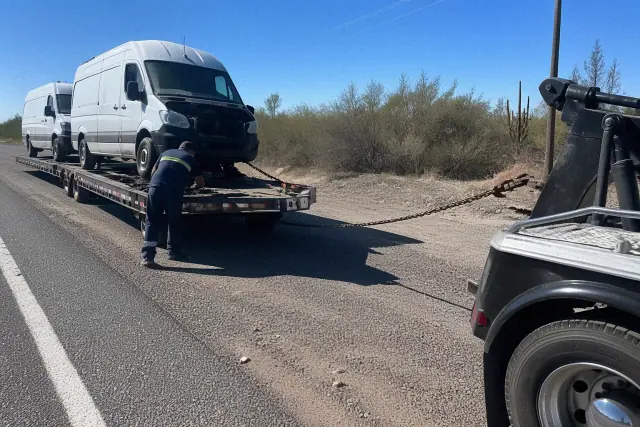
A heavy-duty truck towing a transport trailer parked by a desert road in Tucson, AZ.

Delivery vans and commercial cargo vans can be recovered after a breakdown, collision, or scheduled transport request. Drivetrain layout, existing damage, and cargo load guide the equipment choice.

Request Estimate

Shuttle Bus and Passenger Van Towing

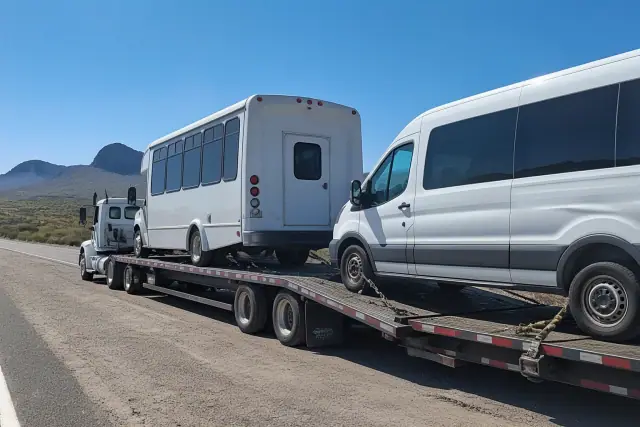
Medium-duty towing of a shuttle bus and passenger van in Tucson, AZ with safety chains and straps visible.

Large passenger vans, school buses, shuttle buses, and small tour buses often fall into the medium duty class. Weight-rated equipment gives these longer vehicles the support and securement needed for transport.

Request Estimate

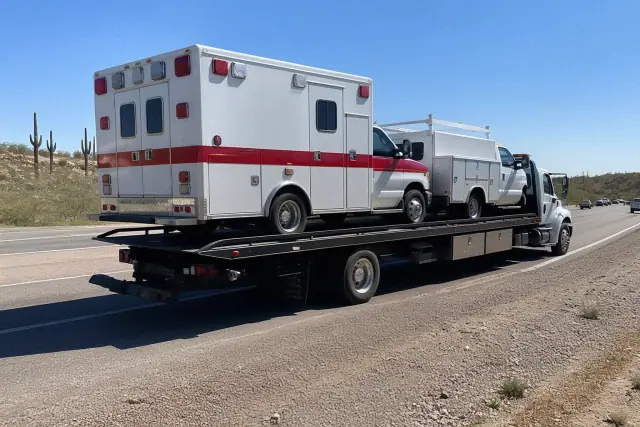
Ambulance and Service Vehicle Towing

Ambulance and service vehicle secured on a flatbed tow truck on a highway in Tucson, AZ.

Ambulances and fleet service vehicles carry equipment that can change their loaded weight and balance. We account for the vehicle class and equipment load before hookup and routing.

Request Estimate

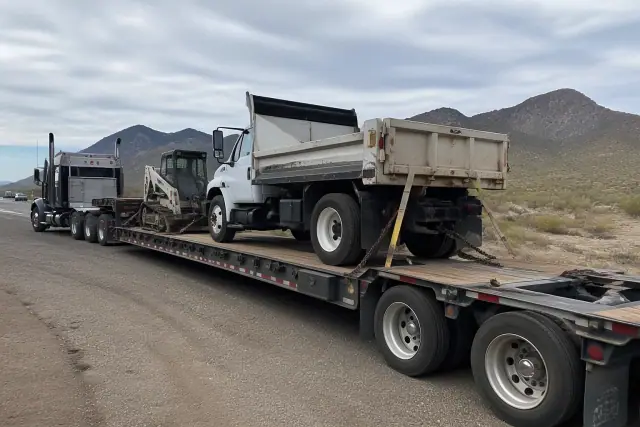
Small Dump Truck and Equipment Towing

Small dump truck being secured with chains and straps on a desert roadside in Tucson, AZ.

We tow small dump trucks and light construction equipment used on residential projects around Vail, Sahuarita, the Tucson foothills, and Rita Ranch. The hookup is selected for the vehicle's weight, configuration, and condition.

Request Estimate

Medium Duty Accident Recovery

Medium duty flatbed tow truck with a secured sedan on a desert road in Tucson, AZ.

Accident recovery starts with an assessment of frame damage, fluid leaks, and airbag deployment before the vehicle is moved. Medium and heavy duty rigs also carry snatch blocks and winch lines for lateral pulls and rollover recovery.

Request Estimate
Equipment and Recovery Options

Medium Duty Towing Transport Methods

The safest method depends on vehicle weight, drivetrain, damage, cargo, and travel distance. These towing and recovery options let our operators match the hookup to the conditions instead of applying one method to every call.

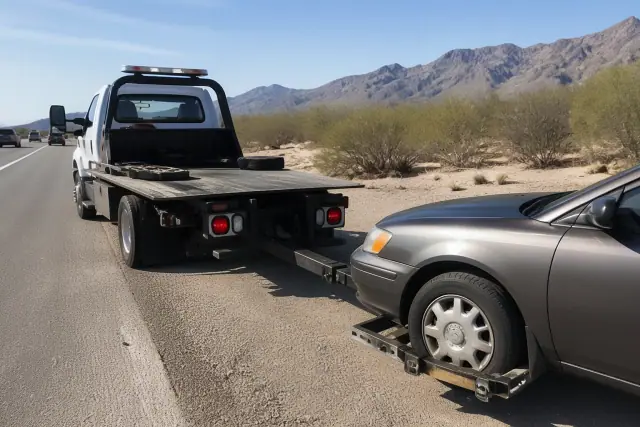
Hydraulic wheel-lift towing a disabled vehicle on a roadside in Tucson, AZ with desert mountains in the background.

Hydraulic Wheel-Lift Towing

A hydraulic wheel lift can handle suitable medium duty vehicles when the weight, axle position, and drivetrain allow wheels to remain on the road safely.

  • Vehicle weight class confirmed before hookup
  • Hydraulic lift capacity matched to the load
  • Drivetrain configuration checked before lifting an axle
  • Frame and existing damage assessed before attachment
  • Flatbed transport used when wheel-lift towing could add risk
Request Estimate
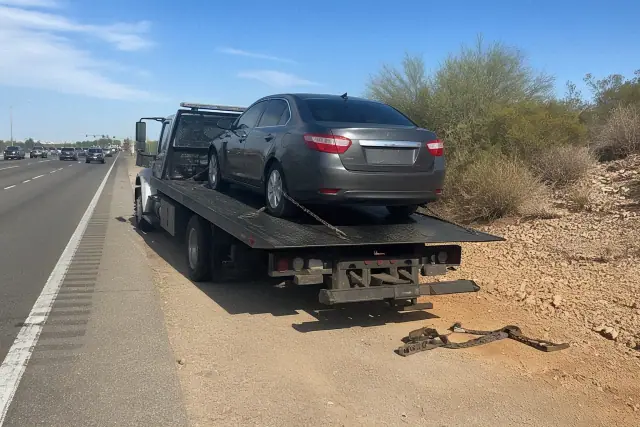
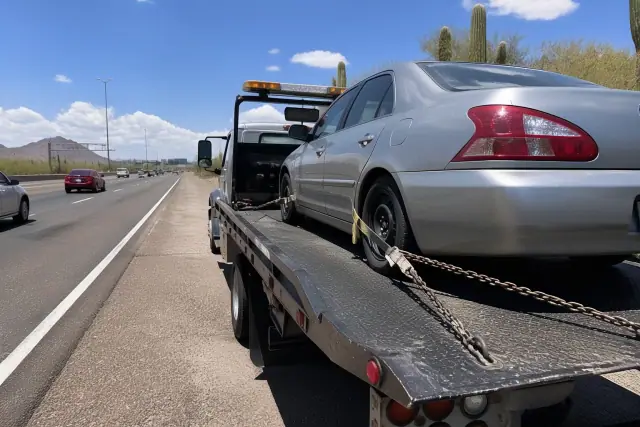
A flatbed tow truck with a secured disabled sedan on a highway shoulder in Tucson, AZ.

Reinforced Flatbed Transport

Flatbed towing removes every wheel from the road and is often the safer option for all-wheel-drive vehicles, four-wheel-drive trucks, lowered vehicles, and vehicles with front-end damage.

  • All four wheels carried on the deck
  • Hydraulic tilt deck and winch loading
  • Non-skid deck surface for controlled transport
  • A minimum of four securement points following Towing and Recovery Association of America best practices
  • Tie-down tension checked again at the halfway point on longer hauls
Request Estimate
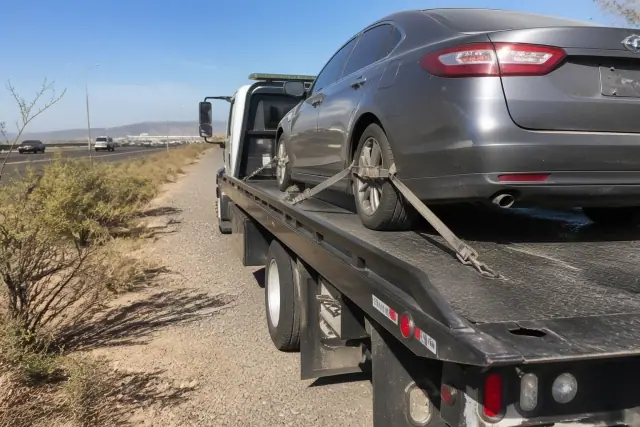
A flatbed tow truck with a secured sedan on the side of a highway in Tucson, AZ.

Medium Duty Roadside Assistance

Some commercial vehicle problems can be resolved on the shoulder without a full tow. If the vehicle cannot return to service safely, the call can transition directly into a medium duty tow.

  • Commercial-grade booster packs for diesel and gas engines
  • Non-destructive lockout tools for mechanical and keyless entry systems
  • Basic tire changes when a usable spare is available
  • Fuel delivery for drivers stranded between stations
  • Direct transition to towing without a second dispatch call
Request Estimate
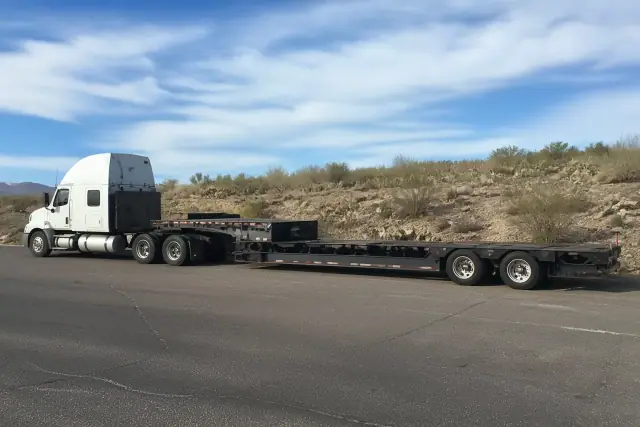
Medium-duty tow truck with a long-distance transport trailer parked in the desert landscape of Tucson, AZ.

Long-Distance Commercial Towing

Long-distance towing adds route planning, repeated securement checks, and commercial documentation to the equipment decision. Service can extend through the Arizona-Sonora border region, toward Phoenix, and into neighboring states when needed.

  • Medium duty trucks equipped for multi-hour hauls
  • Fuel and rest stops planned for trips exceeding a couple hundred miles
  • Regional transport toward Phoenix, 108 miles northwest of Tucson
  • Bills of lading prepared for commercial vehicles
  • Route conditions reviewed for highway and mountain grades
Request Estimate
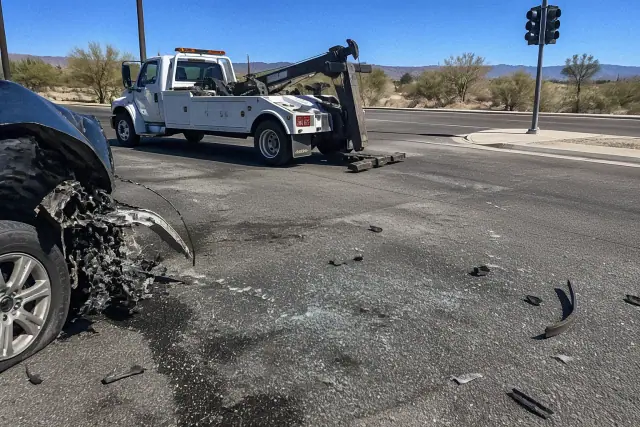
Medium-duty tow truck recovering a damaged vehicle at an asphalt intersection in Tucson, AZ, with debris on the road.

Collision and Rollover Recovery

Collision scenes require controlled extraction, documentation, and a transport plan that accounts for unstable or damaged components.

  • Frame damage reviewed before rigging
  • Fluid leaks and airbag deployment checked
  • Snatch blocks and rated winch lines used for lateral pulls
  • Photos and itemized service records provided
  • Vehicle delivered to the selected body shop or storage yard
Request Estimate
Matching Equipment to the Vehicle

Choosing the Right Medium Duty Towing Approach

The right towing approach starts with the vehicle's loaded weight, axle and drivetrain configuration, existing damage, cargo, and destination. A wheel lift may suit one local recovery, while an all-wheel-drive vehicle, damaged front end, or long haul may call for a reinforced flatbed.

Weight-Rated Towing Equipment

Hydraulic wheel lifts, reinforced decks, and winches are matched to the medium duty weight class. That capacity provides working margin for commercial vehicles carrying cargo or mounted equipment.

Documented and Insured Transport

Our fleet is registered through the Arizona Department of Transportation and carries on-hook and cargo insurance for commercial vehicle moves. Dispatches are documented under the licensing Pima County requires of commercial tow operators.

Real-Time Metro Dispatch

Dispatch tracks truck locations across the Tucson metro area to identify the closest available driver. Coverage extends from downtown and the freeway corridors to Marana and the surrounding service area.

Commercial Towing Support

Why Choose Tucson Towing Co. for Medium Duty Towing

Medium duty recovery calls need more than a standard tow truck. Tucson Towing Co. combines weight-rated equipment, vehicle-specific hookup decisions, continuous dispatch, and clear documentation for commercial towing throughout the metro area.

Request a Towing Quote

Overheated Engines and Cooling Failures

Tucson surface-street asphalt temperatures regularly climb past 140 degrees, and overheated vehicles, worn belts, and cooling-system failures spike from May through September. A disabled box truck or van then needs equipment suited to its weight.

Blown Tires and Pressure Problems

Desert heat is hard on commercial tires and can affect pressure readings. When a safe roadside tire change is not possible, the vehicle can be moved with the appropriate medium duty rig.

Battery and Alternator Failures

High under-hood temperatures contribute to battery problems, while failed alternators can leave a fleet vehicle unable to continue. Commercial-grade booster equipment may resolve a battery call; otherwise, dispatch can move directly to towing.

Unsafe Light-Duty Hookups

A passenger-car wrecker is not rated for a loaded box truck, bus, or other medium duty vehicle. An undersized hookup can bend a frame or damage the transmission and drivetrain.

Drivetrain and Front-End Damage

All-wheel-drive and four-wheel-drive vehicles need drivetrain precautions, and existing front-end damage can make a wheel lift unsuitable. Flatbed transport keeps the wheels off the road and avoids adding stress to damaged components.

Collision and Rollover Damage

Collision damage can leave frames, suspension parts, and fluid systems unstable. A pre-hookup assessment and rated recovery rigging help prevent secondary damage during extraction.

How It Works

Our Medium Duty Towing Process

Each call moves from vehicle and route details to equipment selection, securement, transport, and documentation. The process is adjusted for the weight class, drivetrain, cargo, damage, and destination.

01.

Share Vehicle and Location Details

Tell dispatch where the vehicle is, what type of vehicle it is, whether it carries cargo or mounted equipment, and what happened. Drivetrain and visible damage details help narrow the equipment choice.

02.

Confirm Weight Class and Equipment

We match the vehicle to a medium duty wheel lift or flatbed and account for the route and distance. A firm quote is provided before dispatch based on vehicle class, required equipment, and mileage.

03.

Dispatch the Closest Available Rig

The dispatch system tracks tow truck locations across the metro area in real time. The closest suitable driver is routed to the breakdown or recovery scene.

04.

Assess and Secure the Vehicle

The operator checks drivetrain configuration, frame condition, fluid leaks, and airbag deployment before hookup. Flatbed loads use multi-point tie-downs sized for the vehicle class.

05.

Transport with En Route Checks

The driver follows the planned route and accounts for traffic, grades, and weather. Tie-down tension is checked again at the halfway point on longer hauls.

06.

Deliver and Document the Tow

The vehicle is delivered to the selected repair shop, body shop, storage yard, or other approved destination. Accident tows include photos and itemized records, while commercial long-distance moves can include a bill of lading.

Get the Right Towing Equipment

Request Medium Duty Towing

Tell us the vehicle type, location, condition, and destination so dispatch can match the call with the right medium duty equipment. We will confirm the towing approach and provide a firm quote before the truck departs.

Commercial Towing Help

Medium Duty Towing FAQs

These answers cover vehicle classes, equipment choices, roadside help, pricing, service coverage, and recovery details for medium duty towing in Tucson.

Call Our Dispatch Team

Medium duty towing generally covers vehicles weighing between 10,000 and 26,000 pounds. Common examples include box trucks, moving trucks, delivery vans, large passenger vans, small buses, ambulances, small dump trucks, and some light construction equipment.

Light-duty wreckers are not rated for the weight of many loaded box trucks and commercial vans. A mismatched hookup can damage the frame, transmission, or drivetrain, so the vehicle should be matched with a medium duty wheel lift or reinforced flatbed.

Yes. Dispatch runs continuously, seven days a week, for calls such as a 2 a.m. breakdown or a Sunday-afternoon stall. Same-day towing is standard for local calls, subject to the location and availability of a suitable truck.

Flatbed transport is often preferred for all-wheel-drive and four-wheel-drive vehicles, lowered vehicles, long hauls, or vehicles with existing front-end damage. Keeping all four wheels off the road reduces stress on axles, CV joints, tires, and transmission components.

The operator uses a hydraulic tilt deck, a winch sized for the load, and multi-point tie-downs. Loads are secured at a minimum of four points, and tie-down tension is checked again at the halfway point on longer hauls.

Sometimes. A dead battery, lockout, empty tank, or basic tire problem can often be handled on the shoulder in twenty minutes, and most jump-start calls are resolved in under fifteen minutes on scene. If the vehicle cannot return to service safely, the call can transition directly to a tow.

Typical local Tucson towing rates run from $75 to $160. Mid-range trips of 5 to 20 miles generally run from $125 to $275, with hookup fees of $35 to $100 depending on vehicle class; the final quote also depends on distance and equipment.

At typical Arizona rates of roughly $3 to $7 per mile beyond the standard hookup fee, a 200 mile tow generally costs between $700 and $1,600. Vehicle weight, flatbed or wheel-lift equipment, and mountain grades can change the exact total, so a firm quote is provided before departure.

The operator checks frame damage, fluid leaks, and airbag deployment before rigging the vehicle. Rollover work may require snatch blocks and rated winch lines, and the completed tow includes photos and itemized service records.

Service is available throughout Tucson, Oro Valley, Marana, South Tucson, and the greater Pima County metro area. Calls also extend to supported areas named in the service region, including Vail, Sahuarita, and Green Valley.

Yes, but the operator must check the drivetrain and transfer-case configuration before using a wheel lift. Flatbed transport is the default when there is uncertainty because it keeps the truck's wheels off the road.

Look for clear pricing, commercial insurance, proper registration, and equipment matched to the vehicle's weight. Tucson Towing Co. quotes distance, hookup, and vehicle-class charges before dispatch instead of waiting until the tow is complete.

A waiver may require showing that the impound lacked valid legal grounds under Arizona Revised Statutes Title 28 or requesting an administrative hearing within the applicable window, generally within 10 days of the impound. Contact the impound facility for the documents and deadlines that apply to the specific case.