26,001-lb GVWR Threshold
Gross Vehicle Weight Rating, not curb weight or engine size, determines the tow class because it includes the vehicle and its maximum rated load.
Tucson Towing Co. explains that a heavy-duty tow generally involves a vehicle rated at 26,001 lbs GVWR or more, where standard towing equipment may not be enough. Knowing the vehicle rating, load, and recovery conditions helps match the job to a properly rated wrecker.
Gross Vehicle Weight Rating, not curb weight or engine size, determines the tow class because it includes the vehicle and its maximum rated load.
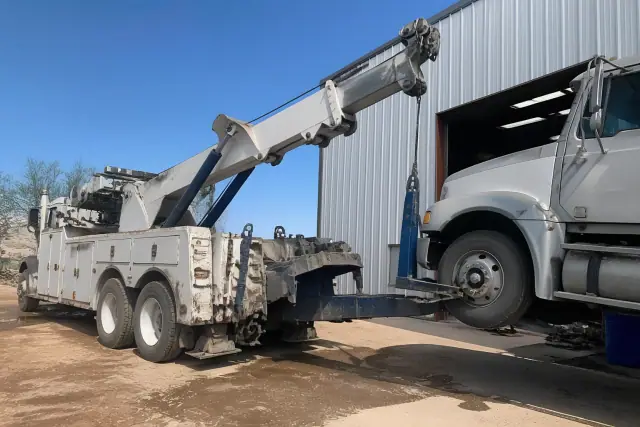
Heavy wreckers use air brakes, hydraulic underlifts, reinforced booms, winches, and outriggers; overturned or unusually heavy loads may require a rotator and multi-point rigging.
Confirm the vehicle's GVWR, whether it is loaded, its axle and hitch configuration, and whether the recovery involves a steep grade, soft shoulder, rollover, or narrow access.
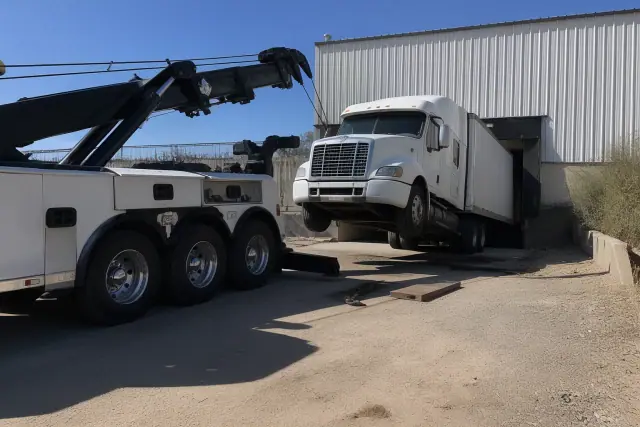
An air brake-equipped heavy wrecker using a hydraulic underlift on a disabled semi along a Tucson highway. This image helps make the size and stabilization demands clear.
A flatbed, a medium wrecker, and a heavy wrecker side by side with passenger, box-truck, and semi examples. The scale difference should explain why the correct class matters.
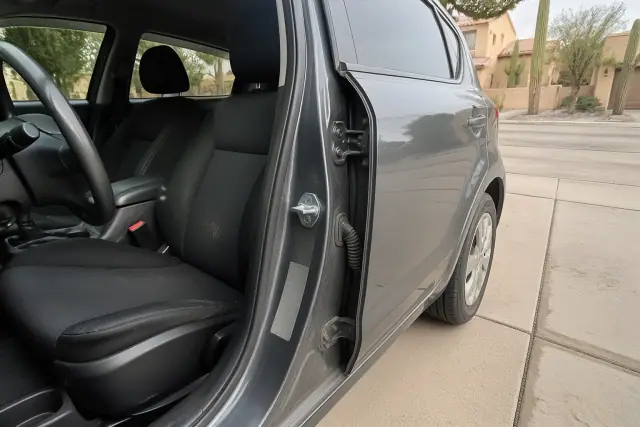
A driver checking a door-jamb GVWR label alongside the trailer's rating plate before towing. Those numbers, plus payload and axle configuration, determine the real limit.
Class 3 covers 10,001-14,000 lbs GVWR; Class 4, 14,001-16,000 lbs; Class 5, 16,001-19,500 lbs; Class 6, 19,501-26,000 lbs; Class 7, 26,001-33,000 lbs; and Class 8, 33,001 lbs and up.
Midsize trucks generally tow 5,000-7,500 lbs, full-size half-tons range from 8,000-14,000 lbs, and heavy-duty three-quarter- or one-ton trucks may reach 15,000-20,000 lbs with a conventional hitch. Some properly configured diesel one-tons approach 40,000 lbs with a gooseneck setup.
Semis, loaded tractor-trailers, Class A motor homes, charter buses, excavators, skid-steers, and backhoes may need heavy wreckers, lowboys, or rotators. A separated tractor and loaded trailer can require two units, especially when combined GVWR exceeds 60,000 lbs.
Do not judge capacity by engine size, cab size, or wrecker tonnage alone. Boom angle, winch line pull, payload, axle ratio, hitch type, braking, steering, and load distribution all affect whether a move can be completed safely.
| Rated Vehicle Weight | Tow Class | Typical Equipment or Vehicle |
|---|---|---|
| Up to 10,000 lbs GVWR | Light duty | Flatbeds and wheel-lifts for passenger cars, motorcycles, and light trucks |
| 10,001-26,000 lbs GVWR | Medium duty | Medium wreckers for box trucks, small buses, and Class 4-6 vehicles |
| 26,001 lbs GVWR and above | Heavy duty | Heavy wreckers or rotators for semis, buses, motor homes, and heavy equipment |
A heavy-duty tow is defined by rated weight and recovery demands, not simply by how large a vehicle looks. Heavy-duty tow trucks generally weigh at least 26,000 lbs themselves so they can counterbalance large loads, while some rigs can handle 80,000 lbs or more depending on their ratings, setup, and rigging.
The exact vehicle and loaded weight come first, followed by drivetrain, axle configuration, hitch type, rigging angle, access, and tow distance. Conventional bumper-pull setups often top out around 20,000 lbs, while some gooseneck or fifth-wheel configurations reach up to 36,000 lbs because the load sits over the rear axle. Tucson heat, steep grades, soft shoulders, and rollover conditions add braking, traction, and stabilization demands. Local short-distance heavy tows typically run $150-$400, while long hauls or complex recoveries can reach $1,000-$5,000 or more.
Can a 12,000 lb trailer be pulled without a CDL? Generally yes when the combination stays under 26,001 lbs; a tow vehicle rated under roughly 14,000 lbs may keep that combination below the threshold, but the exact ratings and 49 CFR requirements should be checked. How much can a 7,000 lb GVWR truck tow? Usually about 5,000-9,000 lbs depending on payload and axle ratio. What does the 80/20 rule mean? It may refer to keeping tongue weight around 10-15% of trailer weight or using only about 80% of maximum tow capacity as a safety buffer.
Share the vehicle type, GVWR, loaded condition, location, and whether the job involves a breakdown, rollover, or difficult access. Those details help a Tucson towing team choose the right equipment and estimate the recovery scope.