Get the Price Before Dispatch
Ask for a ballpark total, hookup fee, and mileage rate on the phone. Refusal to quote or a dramatic price change after arrival is the clearest warning sign.
When you call Tucson Towing Co. or any Tucson towing service, the clearest red flags are vague pricing, missing credentials or insurance, unsolicited trucks, blank paperwork, and equipment that does not fit the vehicle. Spotting those signs before a vehicle is loaded can reduce the risk of surprise charges or avoidable damage, whether you are stranded on Interstate 10, Speedway, or a steep local grade.
Ask for a ballpark total, hookup fee, and mileage rate on the phone. Refusal to quote or a dramatic price change after arrival is the clearest warning sign.
Ask for the US DOT number used for interstate work, applicable Arizona intrastate authority, and proof of cargo and garagekeepers insurance. Evasive answers leave you with little protection if the vehicle is damaged.
All-wheel-drive, low-clearance, and drivetrain-damaged vehicles call for a flatbed, while motorcycles and heavy vehicles need their own rated tie-downs or rigging. A heavy-duty quote given without asking for GVWR is a guess.
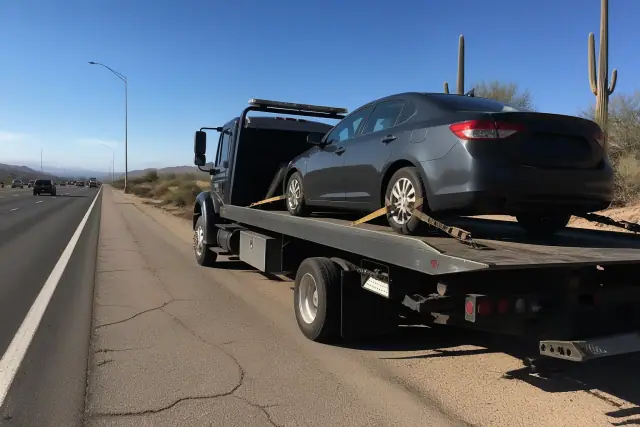
A truck without a visible company name or phone number is difficult to verify. The driver should also understand the correct hookup procedure for your vehicle.
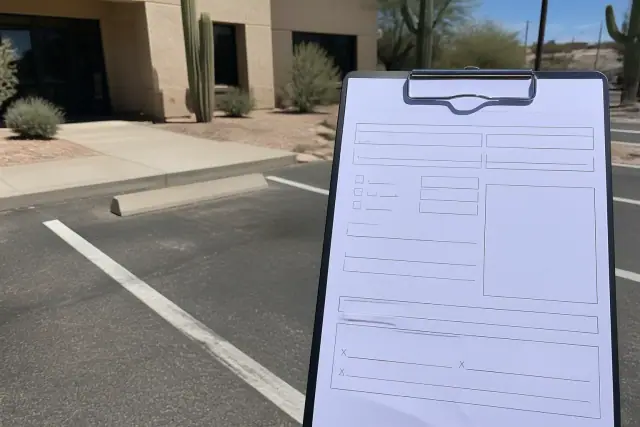
A completed authorization should identify the agreed work and pricing. Pressure to sign empty fields is a reason to stop the tow.
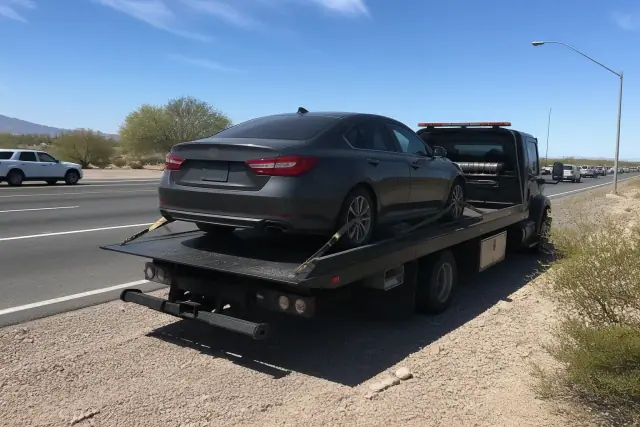
A flatbed keeps all four wheels off the road and avoids dragging the drivetrain. That setup also matters for low-clearance cars and vehicles with drivetrain damage.
A large jump from the phone quote without a clear change in mileage, vehicle class, or rigging needs deserves an explanation before loading.
No physical business address, an out-of-area phone number, missing operating credentials, and no insurance proof are common signs of a fly-by-night operator.
Outdated equipment, improper motorcycle straps, or a towing setup pushed past roughly 80 percent of rated capacity reduces the safety margin for grade, heat, and wind.
A truck that arrives before you call, or a driver who pushes you to sign blank paperwork, points to predatory tactics rather than a clear service agreement.
| Red Flag | What to Ask or Check | Safer Response |
|---|---|---|
| No usable quote | Hookup fee, mileage rate, estimated total, and what is included | Confirm the terms before dispatch. |
| Credentials are missing | US DOT number for interstate work, applicable Arizona authority, and proof of cargo and garagekeepers insurance | Choose an operator who can document them. |
| Truck or paperwork looks wrong | Company markings, completed authorization, vehicle type, and planned equipment | Do not sign blank forms or allow loading. |
| Heavy-duty quote is vague | GVWR, rigging needs, wrecker capacity, and safety margin | Use an operator who calculates from the vehicle details. |
One warning sign can be a reason to pause; several together are a strong reason to call another operator. A legitimate dispatcher should be able to explain pricing, expected response time, credentials, insurance, and equipment before the truck is committed. The goal is a clear, vehicle-specific plan rather than a rushed decision at the roadside.
As a rough Tucson reference, short local tows under 5 miles may run about $35 to $125, tows up to 40 miles about $125 to $275, and trips approaching 100 miles $600 or more; a dramatic change from the phone quote deserves an explanation before loading. Flatbeds are the safer match described in this guide for all-wheel-drive vehicles, low-clearance sports cars, and vehicles with drivetrain damage. Motorcycle transport calls for wheel chocks and soft-tie straps rated for the bike's weight; ratchet straps looped through the frame can bend forks or crack fairings. Pickups, box trucks, and small commercial rigs may need medium-duty equipment because of axle weight and specialized rigging. Semis, RVs, and equipment loads require rotator or heavy-wrecker capacity, and the operator should ask for GVWR rather than guess.
What should you ask on the phone? Request a ballpark quote, hookup and mileage rates, estimated response time, credentials, insurance limits, and the equipment planned for your vehicle. What should you tell dispatch? Give the vehicle class, drivetrain, clearance or damage concerns, destination, and-on heavy-duty calls-the GVWR. What should you check before loading? Confirm the truck is marked and the authorization is fully completed, and refuse blank paperwork.
Share your vehicle type, location, destination, and any drivetrain, clearance, or damage concerns. Ask for the estimated total and planned towing equipment before dispatch.